Precision-engineered stainless steel and non-stick cookware designed to meet stringent EU CE, LFGB, and ISO 9001 quality specifications for commercial and residential applications.
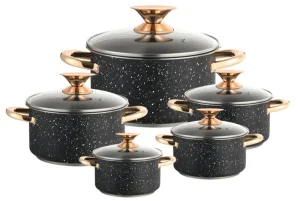
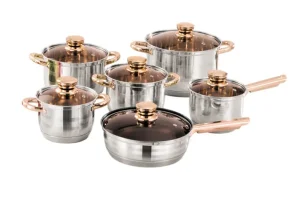
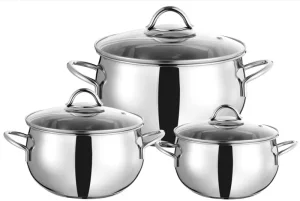
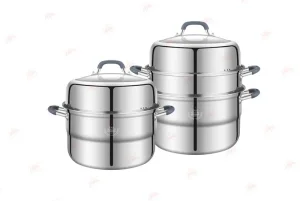
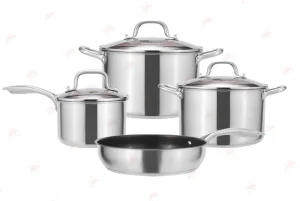
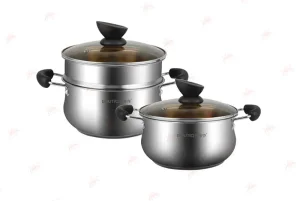
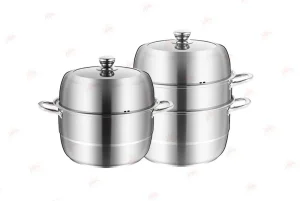
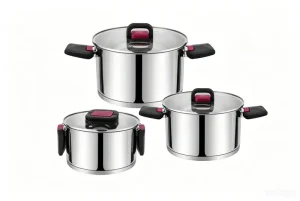
In the rapidly changing modern global home and kitchen supply chain, direct-factory procurement is no longer evaluated purely on unit manufacturing cost. International brand owners, commercial kitchen equipment distributors, enterprise importers, and retail conglomerates are systematically restructuring their vendor evaluation criteria around strict regulatory compliance, standardized metallurgy, verified thermal performance, and verifiable operational E-E-A-T (Experience, Expertise, Authoritativeness, and Trustworthiness).
Analysis of enterprise intent reveals four major macro trends reshaping the global cookware manufacturing and procurement landscape:
Global consumers and regulatory bodies are strictly phasing out toxic synthetic chemical coatings containing PFAS, PFOA, Lead, and Cadmium. Enterprise buyers require third-party laboratory verification (TUV Rheinland, LFGB, FDA) showing zero chemical migration under extreme thermal conditions. Stainless steel formulations (specifically AISI 304 and 316 grades) and inert ceramic/marble composite structures are capturing dominant market shares.
With the rapid worldwide adoption of induction cooktops, thermal dynamics engineering is paramount. Capsule-bottom and fully clad tri-ply cookware structures (incorporating pure aluminum cores encapsulated within magnetic AISI 430 stainless steel bases) deliver rapid energy transfer, eliminate localized hot spots, and reduce commercial energy usage by up to 35%.
Industrial and residential user experience hinges on handle design. European commercial kitchens specify solid stainless steel bar handles, branch-style hollow handles for thermal isolation, and silicone-covered athermic grips capable of withstanding oven temperatures while remaining cool during long stovetop cycles.
Retail brands demand highly customizable OEM/ODM solutions—ranging from aesthetic surface finishes (mirror polishing, satin lines, matte black, PVD rose gold accents) to bespoke laser etching of brand logos and customized multi-lingual retail packaging designed for e-commerce drop-shipping resilience.
To guarantee institutional reliability and compliance, WEIHUA cookware systems utilize advanced multi-layer bonding technology. Below is the technical breakdown of our tri-ply and capsule bottom engineering Matrix:
| Layer Architecture | Material Composition | Technical Function | Compliance Standard |
|---|---|---|---|
| Interior Contact Surface | Food-Grade Stainless Steel (SS304 / AISI 18/10) | Inert food contact surface, highly resistant to acid corrosion, rusting, and pitting. Zero toxic chemical leaching. | LFGB, EU 1935/2004, FDA 21 CFR |
| Thermal Core Layer | High-Purity 1050/1100 Aluminum Core | Uniform thermal diffusion across base and sidewalls. Eliminates hot spots and prevents food scorching. | CE Energy Efficiency Benchmark |
| Exterior Induction Base | Magnetic Stainless Steel (SS430 / AISI 18/0) | Provides high magnetic permeability for seamless operation on high-wattage commercial induction hobs, gas, electric, and ceramic stoves. | CE Low Voltage & Compatibility Directive |
| Non-Stick System (Optional) | Multi-Layer PTFE/Ceramic Marble Composite with Honeycomb Etch | Scratch-resistant matrix protecting non-stick properties from metal utensil abrasion while facilitating low-fat cooking. | REACH, RoHS, PFAS-Free Certification |
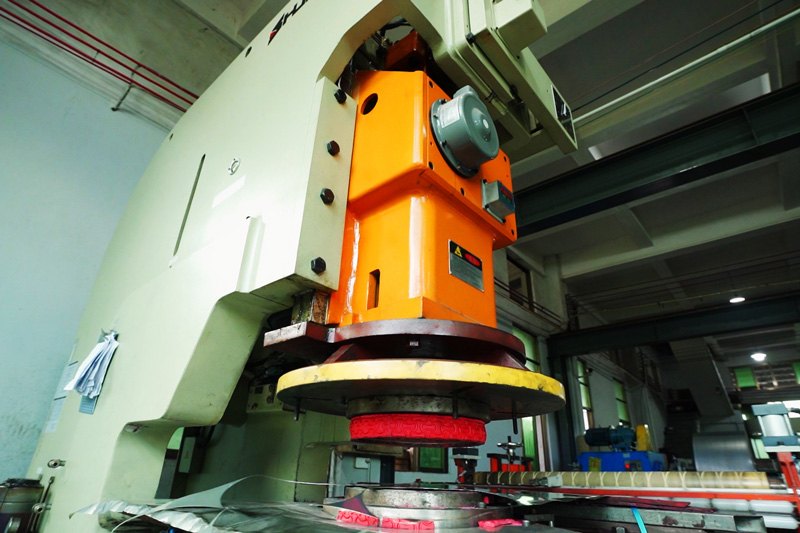
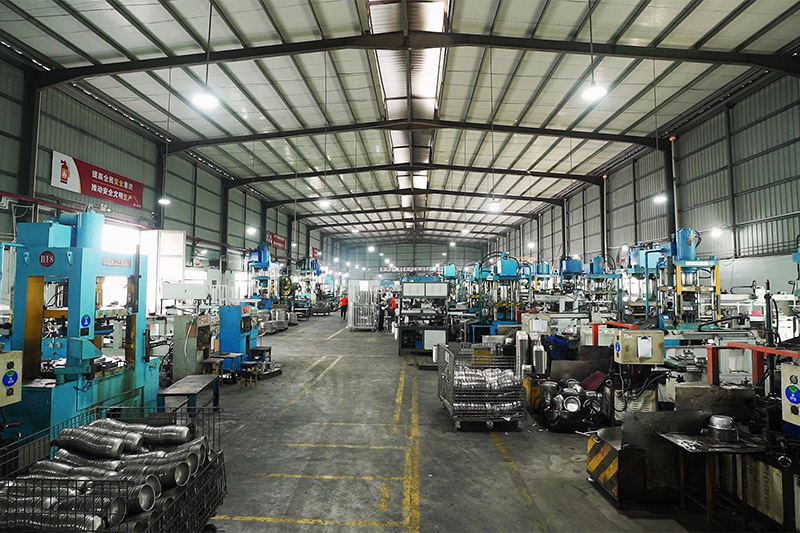
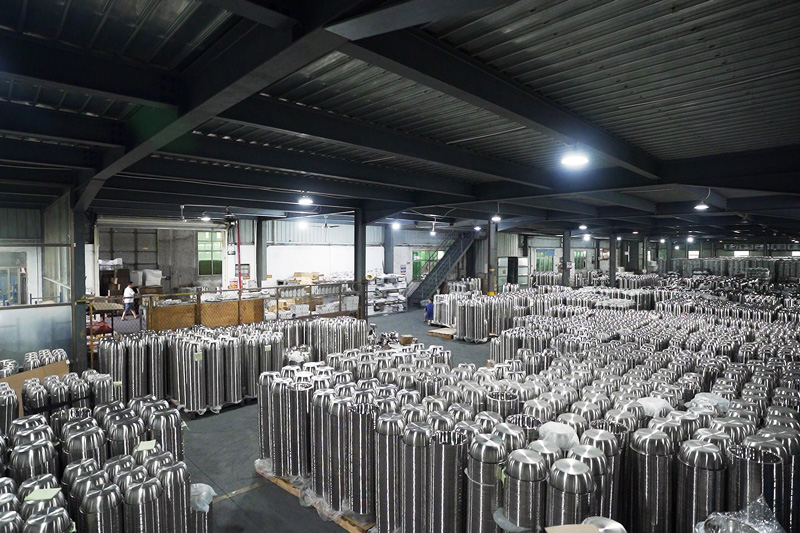
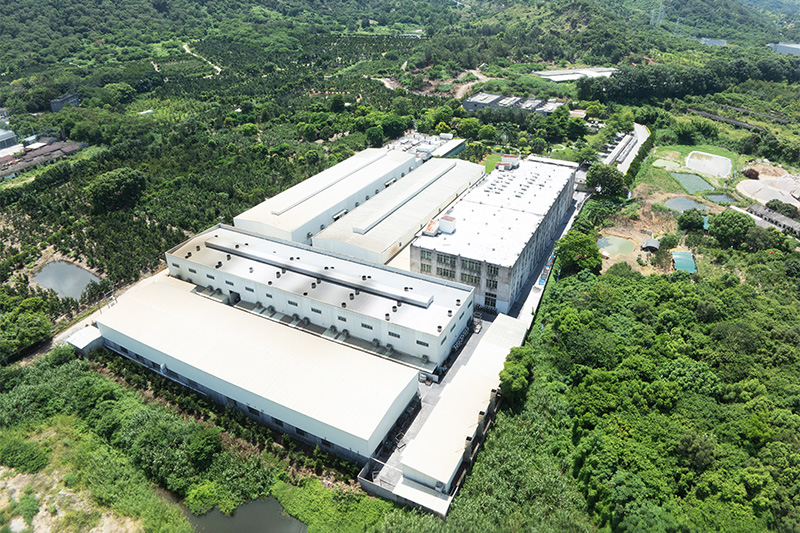
Established in 1997, Chaozhou Chaoan Weihua Hardware and Electrical Appliances Co., Ltd. is located in Chaozhou, a beautiful and prosperous manufacturing hub in South China. Owning an expansive physical factory footprint of 350,000 square feet (over 30,000 square meters), the company operates 35 automated high-speed production lines and employs a workforce of more than 300 highly skilled personnel, including specialized metallurgists and QC engineers.
A track record of continuous industrial scaling, quality system implementation, and global market expansion:

Our competitive advantage rests upon four core foundational pillars designed to mitigate risk for international procurement executives:
We continuously research global consumer trends, transform ergonomic concepts into actionable CAD designs, and explore advanced metallurgical bonding. With a user-centric approach, our engineering team regularly releases innovative product lines with improved thermal transfer and anti-warp bottom configurations.
Unlike generalist trading firms, Weihua focuses exclusively on the specialized manufacturing of premium stainless steel cookware (casseroles, steamers, soup stockpots, frying pans) and precision food-grade bowls (salad bowls, mixing bowls, soup basins). This dedicated specialization guarantees unparalleled manufacturing mastery.
Weihua strictly implements 6S management (Seiri, Seiton, Seiso, Seiketsu, Shitsuke, Safety) across all 35 production lines. This systematic discipline enhances operational throughput, eliminates defects early in the production cycle, guarantees worker safety, and maintains consistent batch-to-batch product execution.
Over 60% of our global corporate clients have maintained continuous partnerships with Weihua for more than 10 years. This exceptionally high retention rate reflects our unwavering commitment to stable material quality, on-time delivery schedules, and transparent commercial practices.
Understanding European compliance is critical when evaluating a "CE Certification Home And Kitchen Service & Company". The CE mark (Conformité Européenne) represents a mandatory declaration that products sold within the European Economic Area (EEA) meet strict safety, health, and environmental protection requirements.
For home and kitchen electrical appliances, CE compliance mandates adherence to the Low Voltage Directive (LVD 2014/35/EU) and Electromagnetic Compatibility Directive (EMC 2014/30/EU), guaranteeing insulation integrity, thermal cutoff mechanisms, and non-interference with power grids.
Cookware surfaces coming into direct contact with food must strictly comply with EU Framework Regulation EC 1935/2004. This ensures materials do not transfer constituent elements into foodstuffs in quantities that endanger human health or bring about an unacceptable change in food composition.
German LFGB (Lebensmittel-, Bedarfsgegenstände- und Futtermittelgesetzbuch) § 30 & 31 represents the most stringent food safety testing standard in Europe. Passing LFGB certification by TUV audit validates that Weihua cookware handles organic sensoric testing, heavy metal release limits, and overall chemical inertness.
Verified third-party testing credentials, international system standards, and proprietary trademark registration:
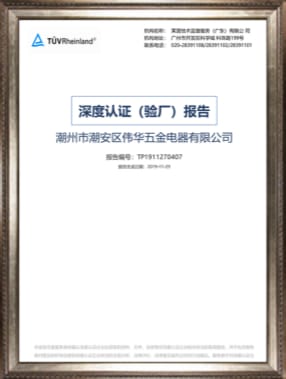
TUV Rheinland Quality Audit
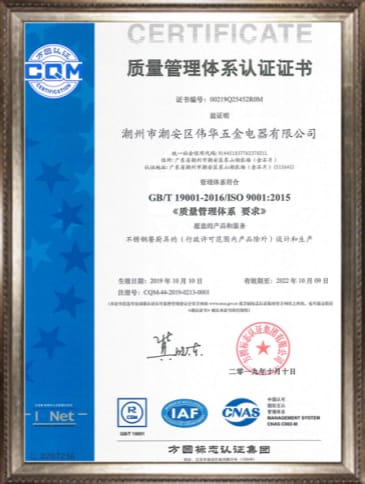
ISO-9001:2015 Management System
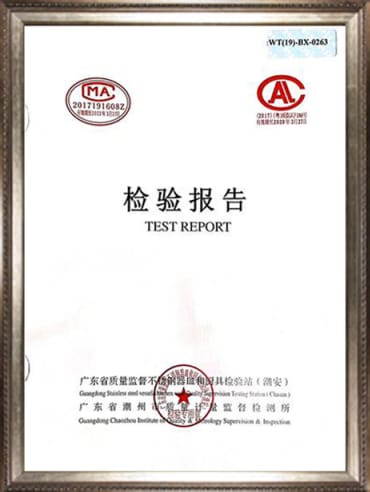
CMA China Accredited Testing
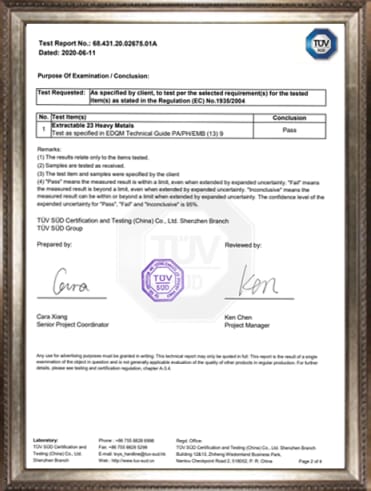
International Food Contact Standard
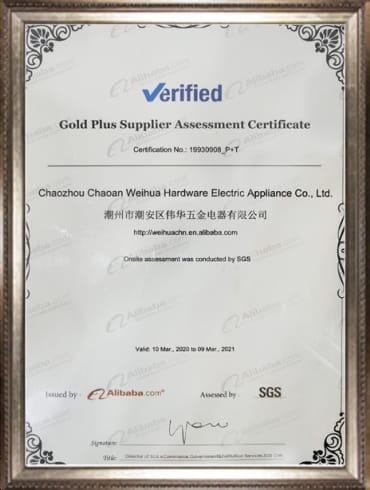
Germany LFGB Food Safety Standard
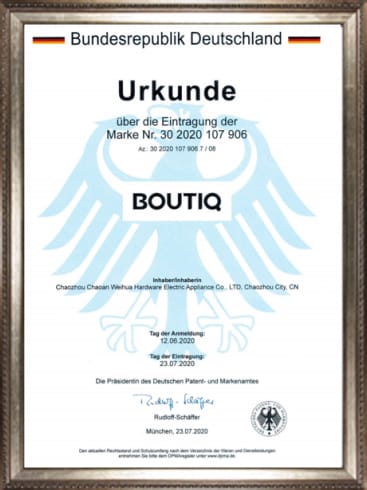
German Registered Brand: BOUTIQ
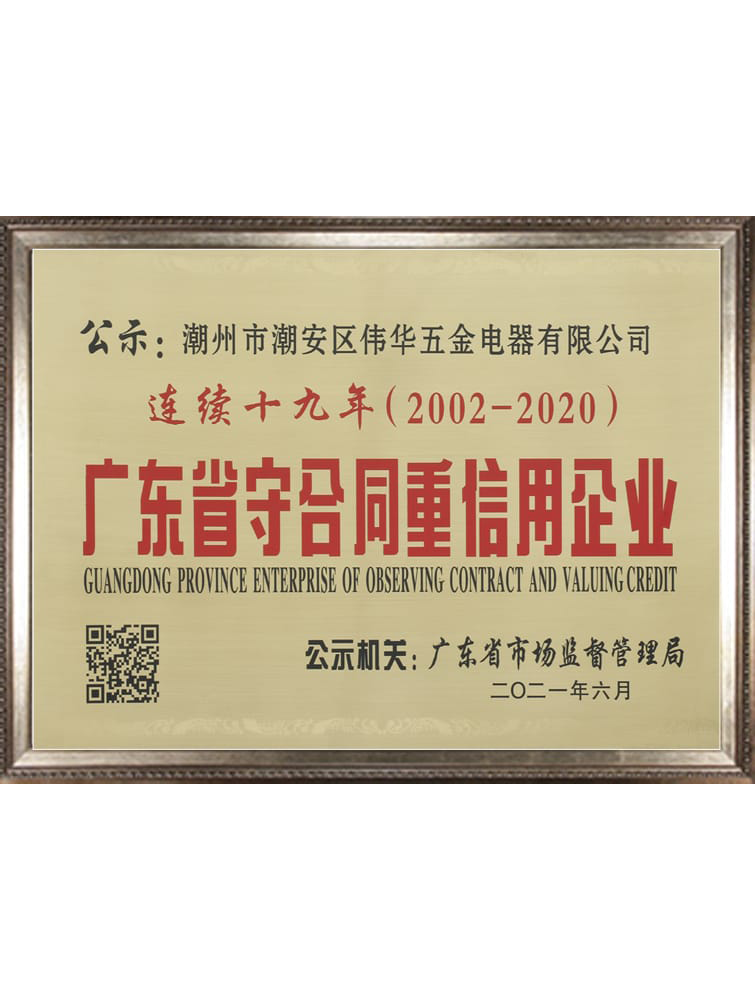
19 Years Contract-Abiding Enterprise
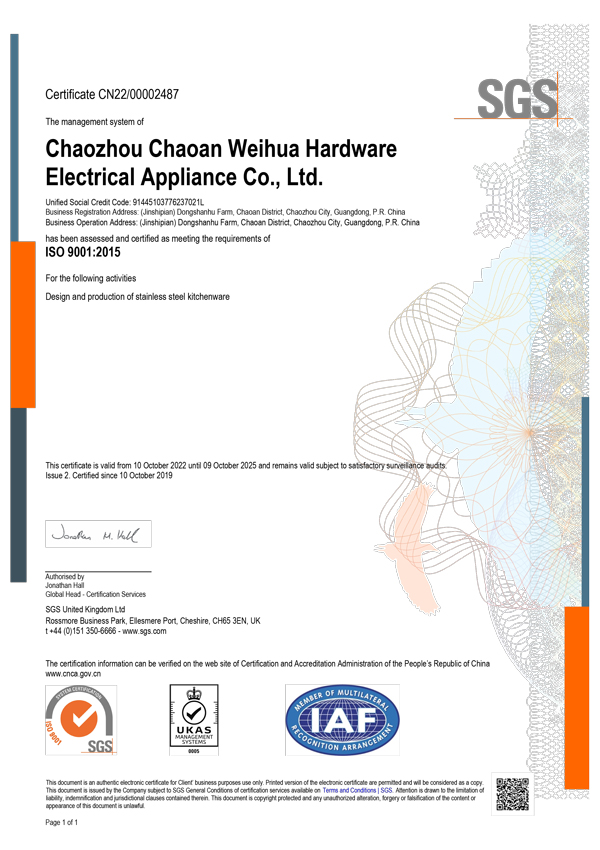
Factory Audit Compliance
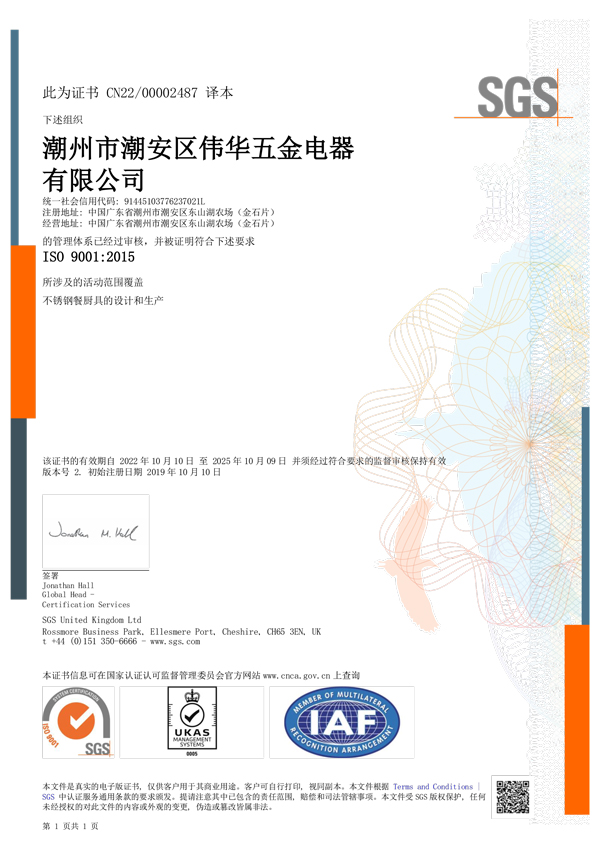
International Verification Report
WEIHUA is driving the next generation of smart, eco-conscious cookware manufacturing. Our 5-year engineering development strategy focuses on three core technological frontiers:
Pioneering advanced sol-gel ceramic matrices and laser-etched stainless micro-structures that provide high non-stick performance with absolute zero fluorinated chemicals, meeting upcoming EU REACH ban requirements ahead of schedule.
Integrating fully automated robotic laser welding for rivetless interior pot construction, combined with computer-vision optical sensors that inspect wall thickness and surface polish consistency at sub-millimeter tolerances.
Transitioning factory energy sourcing toward solar thermal integration and establishing closed-loop steel recycling systems, reducing the embedded carbon footprint per finished cookware set by 40% by 2028.
Direct answers to essential regulatory, operational, and procurement queries submitted by global commercial buyers:
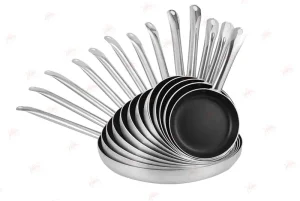
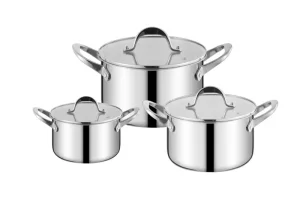
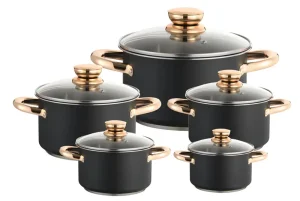
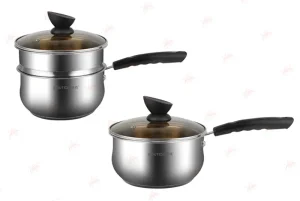
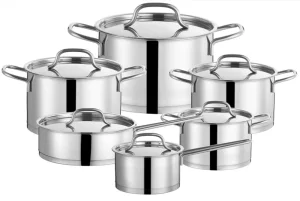
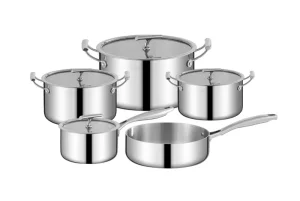
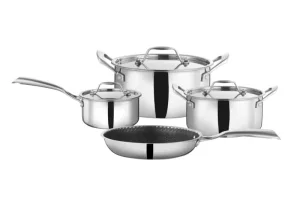
Explore our full range of multi-ply stockpots, frying pans, and specialized steamers available for global enterprise contract manufacturing.
 Weihua Hardware