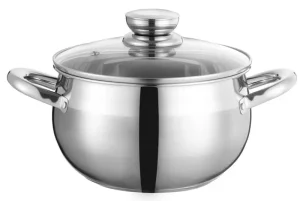
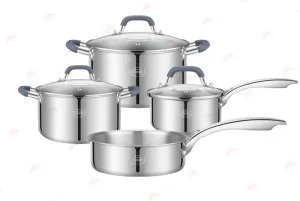
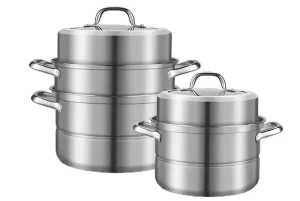
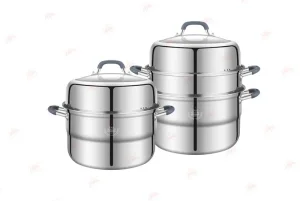
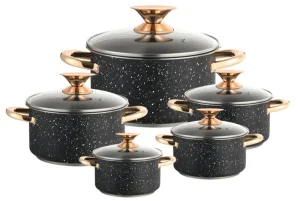
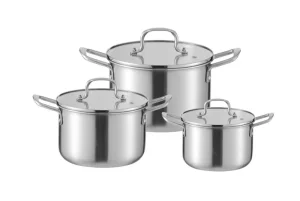
Precision-Engineered Stainless Steel and Non-Stick Solutions Optimized for Commercial Procurement, High-Volume Retailers, and Global Brands.
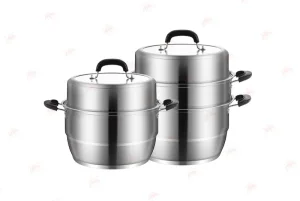
An Exhaustive Technical Report on Material Science Advancements, Global Regulatory Shifts, and Procurement Intent Dynamics for Institutional Buyers.
The global culinary equipment and cookware manufacturing landscape is undergoing a systemic paradigm shift driven by evolving consumer wellness priorities, stringent international environmental regulations, and breakthroughs in material engineering metallurgy. Commercial buyers, brand owners, and retail conglomerates are increasingly evaluating suppliers not merely on unit cost, but on comprehensive material integrity, thermal efficiency metrics, supply chain compliance, and long-term structural resilience.
Traditional single-ply cookware—whether stamped aluminum or thin-gauge single stainless steel—is rapidly losing market share across North American, European, and Asia-Pacific markets. Modern commercial kitchens and premium consumer segments demand uniform heat distribution that eliminates localized hot spots. This requirement has propelled the widespread adoption of Tri-Ply (3-Ply) and 5-Ply cladding technologies. These composite materials fuse an internal layer of food-grade austenitic stainless steel (such as SUS304/EN 1.4301) with a high-conductivity core of commercial-grade pure aluminum (Al 1050 or Al 3003), enclosed by a magnetic ferritic stainless steel exterior (such as SUS430/EN 1.4016) engineered specifically for induction stovetop compatibility.
Global regulatory bodies, including the European Chemicals Agency (ECHA) under REACH regulations and the U.S. FDA, have intensified scrutiny over legacy non-stick fluoropolymer formulations containing Perfluorooctanoic Acid (PFOA) and related PFAS compounds. As a direct result, enterprise procurement trends show an explosive demand for:
In an era characterized by global macroeconomic volatility and freight cost fluctuations, enterprise importers require manufacturing partners capable of delivering massive scale, consistent dimensional tolerances, and integrated RTS (Ready-to-Ship) warehousing. Factories that combine automated deep-drawing stamping lines, high-frequency impact bonding for induction bases, and continuous 6S operational management represent the backbone of robust global supply chains.
When sourcing wholesale cookware materials, thermal conductivity (expressed in W/m·K) and structural yield strength (MPa) must be balanced. Pure aluminum offers a high thermal conductivity (~237 W/m·K), but lacks structural hardness and magnetic permeability. By bonding 304 Stainless Steel (16 W/m·K, highly non-reactive) with an aluminum inner core and a 430 magnetic steel outer base, manufacturers achieve optimal heat dispersion across the cooking surface while maintaining 100% induction efficiency and structural zero-warpage guarantees.
Chaozhou Chaoan Weihua Hardware and Electrical Appliances Co., Ltd.
Established in 1997, Chaozhou Chaoan Weihua Hardware and Electrical Appliances Co., Ltd. has grown into an international benchmark in stainless steel cookware manufacturing and advanced metal formation. Situated in Chaozhou, Guangdong Province—a historic center of hardware manufacturing in South China—Weihua operates an expansive modern industrial park spanning over 350,000 square feet (30,000+ square meters).
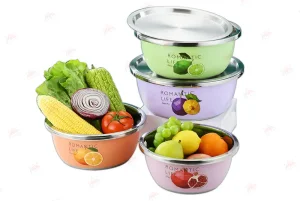
Our facility houses 35 state-of-the-art automated production lines, an advanced metallurgical R&D center, and a dedicated 10,000-square-meter RTS warehousing complex. Backed by a workforce of over 300 highly skilled engineers and technicians, Weihua delivers daily production outputs reaching 50,000 stainless steel mixing basins and 10,000 premium cookware pots, serving major international brands, department stores, and commercial kitchen suppliers globally.
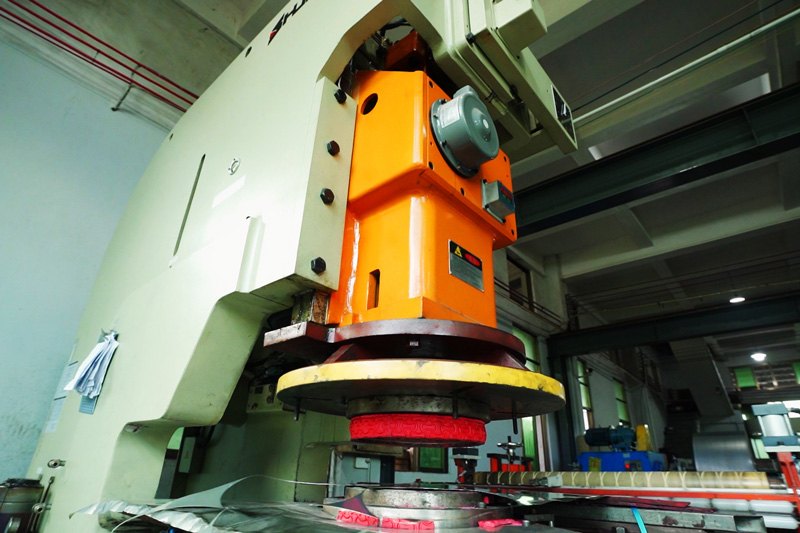
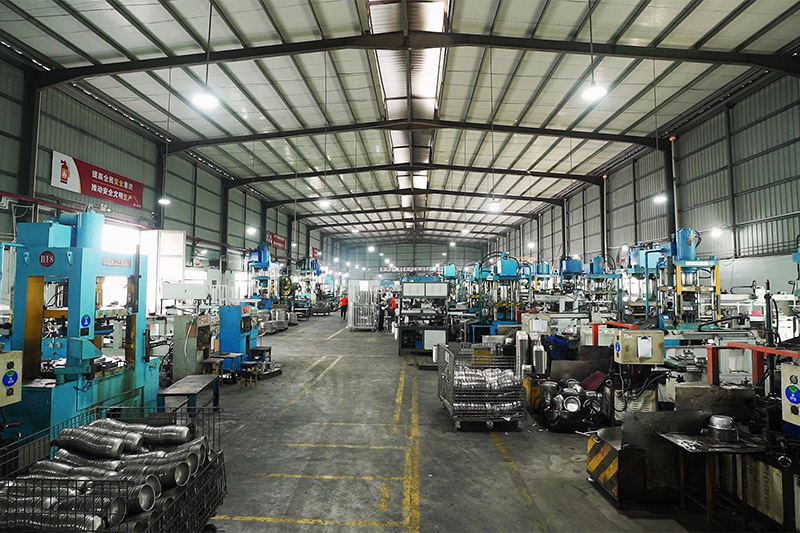
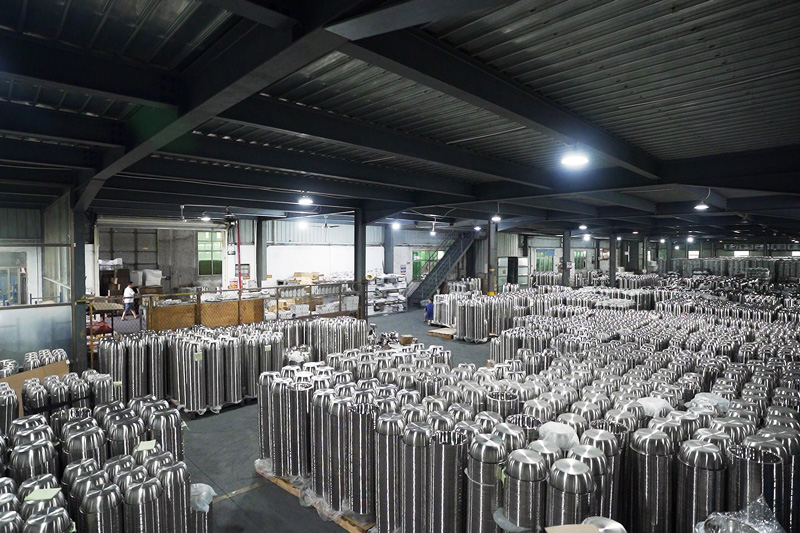
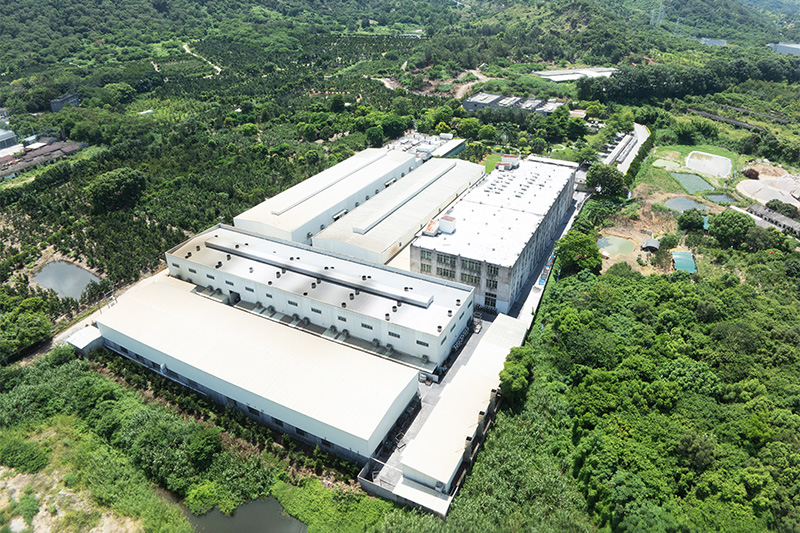
Demonstrating Uncompromising Commitment to Quality, Metallurgical Research, and Operational Efficiency.
Rigorous Quality Assurance Standards Meeting North American, European Union, and Asian Food-Contact Safety Norms.
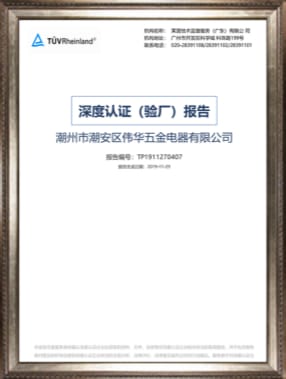
TUV Rheinland Quality Audited
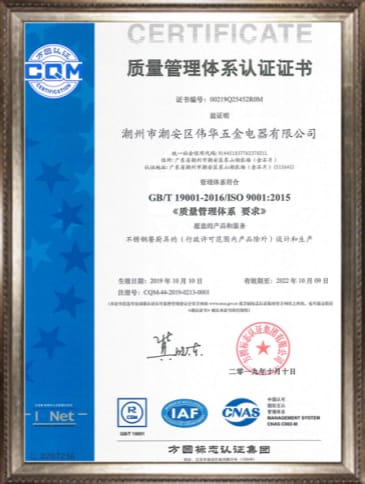
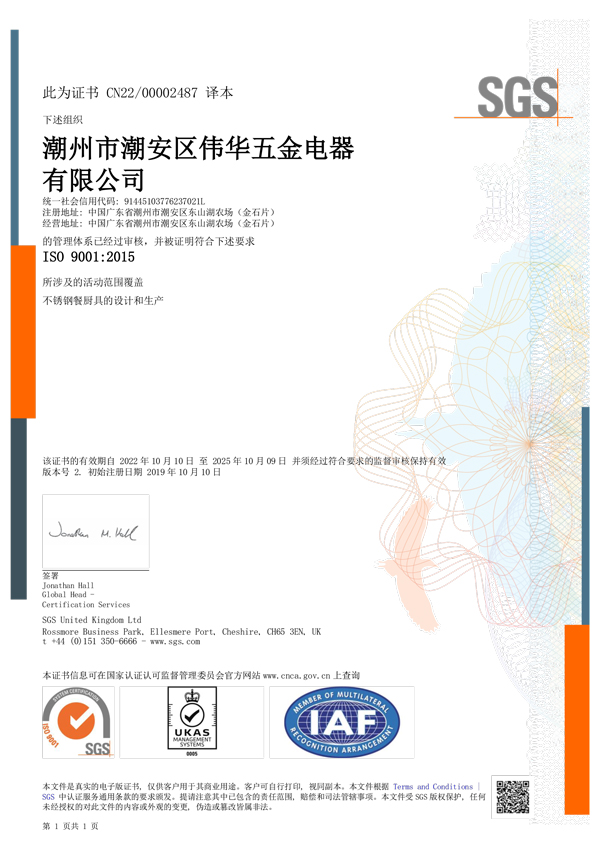
ISO-9001:2015 Quality Standard
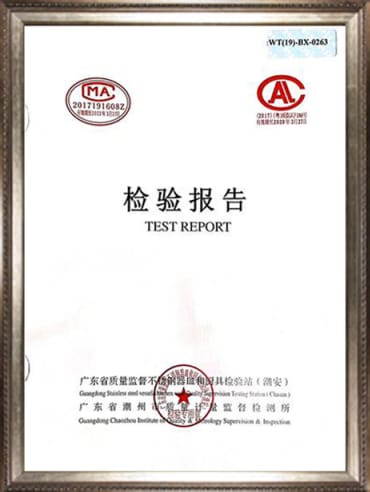
CMA Accredited Testing
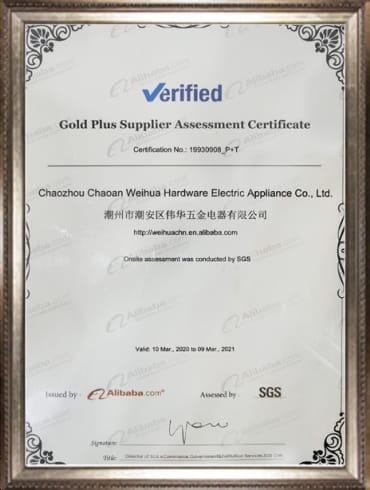
Germany LFGB Food Grade Pass
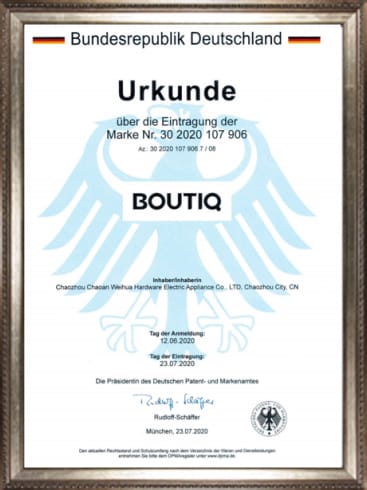
Registered Brand: BOUTIQ
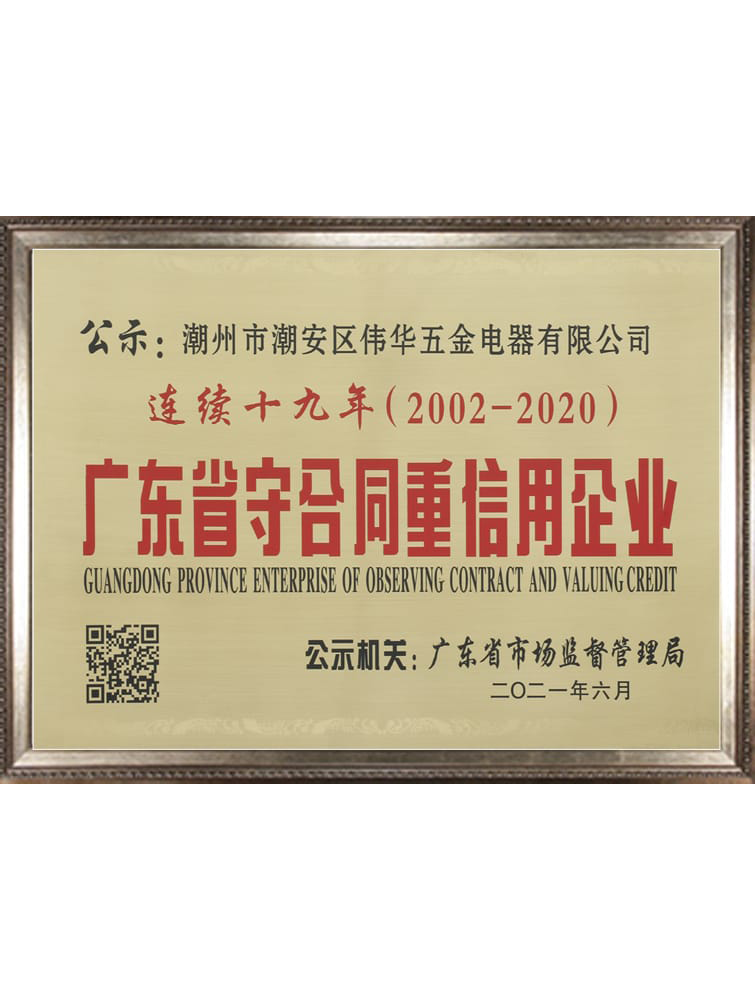
19-Yr Credit-Worthy Enterprise
CE European Standard
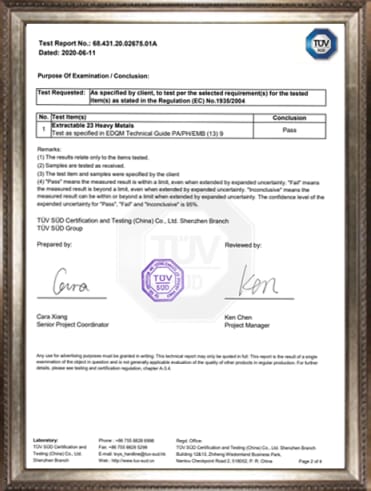
Heavy Metal Leaching Safe
Anticipating Industry Demands for Energy Efficiency, Smart Induction Response, and Sustainable Production.
As smart kitchens and high-efficiency induction cooking appliances become standard worldwide, cookware design must evolve to optimize electromagnetic response, thermal distribution, and ergonomic safety. Weihua's technology roadmap focuses on three main initiatives:
Developing ultra-thin, high-density 5-ply cladding structures that integrate copper core layers (Cu 99.9%) sandwiched between aircraft-grade aluminum alloy sheets. This structure reduces warm-up latency by 35% compared to conventional multi-ply cookware while keeping overall weight manageable for home cooks and commercial chefs alike.
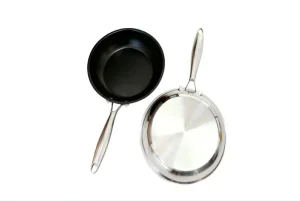
In response to global phase-outs of legacy fluoropolymers, Weihua is pioneering high-adhesion plasma-sprayed ceramic matrixes. By utilizing plasma arc spraying at temperatures exceeding 10,000°C, micro-ceramic particles lock directly onto the metal substrate without synthetic chemical primer coats. This process delivers superior non-stick performance with zero VOC emissions during manufacturing and 100% recyclability at end-of-life.
Transitioning from automated mechanical stamping to AI-assisted automated vision inspection across all 35 production lines. Cameras powered by neural visual model algorithms inspect surface mirror polishing, rim curling uniformity, and handle weld structural integrity in real-time. This system ensures every piece leaving our 350,000 sq ft facility meets strict international quality criteria.
Detailed Technical Clarifications for Global Importers, Wholesalers, and Brand Managers.
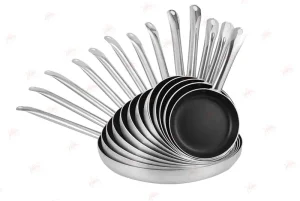
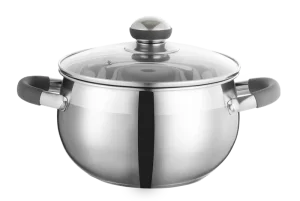
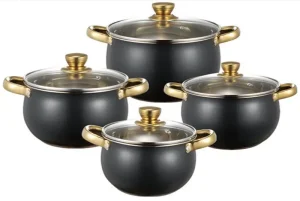
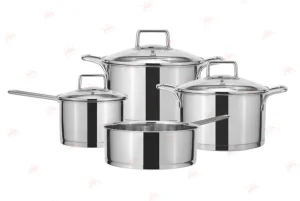
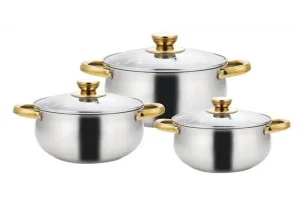
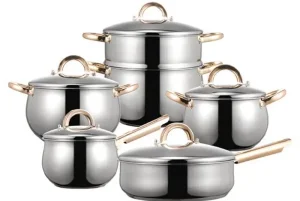
High-Performance Steamer Sets, Belly Pots, Stock Pots, and Architectural Non-Stick Cookware Solutions.
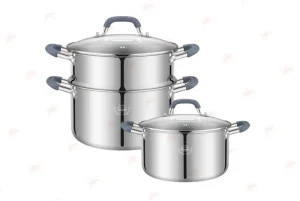
 Weihua Hardware