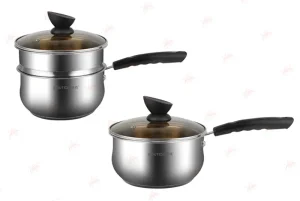
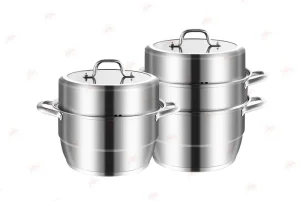
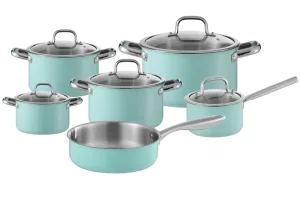
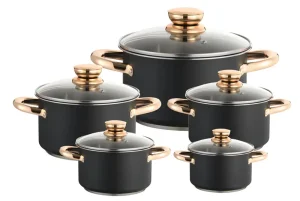
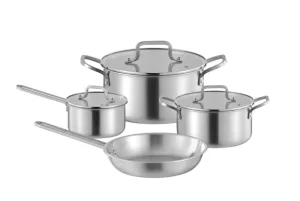
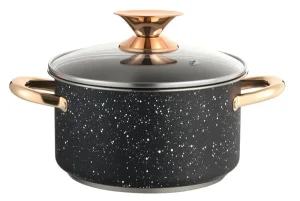
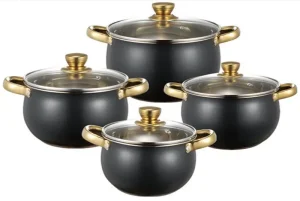
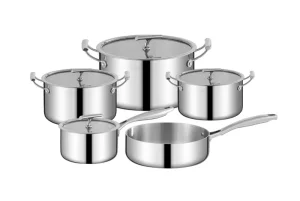
Explore our premium engineered cookware sets tailored for commercial importers, brand owners, and global distributors.
In the modern global kitchenware supply chain, the commercial demand for ODM (Original Design Manufacturer) rated pots and pans sets has expanded far beyond simple cooking vessels. Global B2B procurement officers, private-label brand managers, and commercial distributors are seeking multi-layered, energy-efficient, and aesthetically refined cookware that aligns with strict environmental standards (LFGB, FDA, CE) and consumer expectations.
Mining user intent across global B2B procurement queries reveals a core shift: buyers are searching for high-yield manufacturing partners capable of delivering tailored metallurgy (such as 3-ply and 5-ply clad stainless steel), ergonomically balanced hardware (like athermic hollow handles and rose gold PVD coatings), and robust quality control systems (6S lean production and ISO-9001 compliance).
Information Gain Insight: Sourcing an ODM cookware solution isn't merely purchasing physical inventory—it is acquiring an integrated thermal engineering system. Premium rated pots and pans must guarantee uniform heat distribution, zero structural warping under high thermal stress, and maximum energy efficiency across modern induction cooktops.
The standard for "rated" cookware relies heavily on the structural bonding of disparate alloys. Modern high-performance ODM pots and pans sets utilize multi-clad matrix technologies to overcome the thermal limitations of monolithic metals.
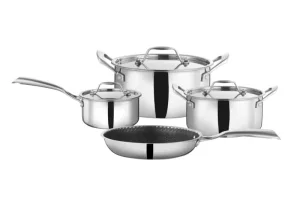
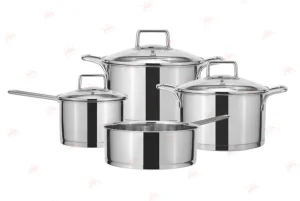
Tri-ply construction represents the gold standard in premium cookware engineering. The interior cooking surface utilizes food-grade 18/10 (SUS304) Stainless Steel, ensuring exceptional chemical stability, corrosion resistance, and non-reactive cooking characteristics when exposed to acidic foods. The core consists of a heavy-gauge pure aluminum alloy plate (AL1050), which provides thermal conductivity nearly five times higher than stainless steel, rapidly transferring thermal energy up the sidewalls of the pot. The exterior layer consists of magnetic stainless steel (SUS430), enabling seamless compatibility with high-frequency electromagnetic induction burners.
For heavy-duty commercial applications, 5-ply construction incorporates alternating layers of aluminum alloys and stainless steel cores. This density creates higher thermal mass, allowing cookware to retain ambient cooking temperature during continuous high-volume food processing, thereby reducing thermal drop when raw ingredients are introduced.
Our manufacturing plant utilizes automated high-tonnage friction bonding presses. By applying pressures exceeding 2,500 tons alongside localized thermal softening, the encapsulate aluminum disc is fused permanently to the vessel base without air pockets or gaps. This eliminates thermal hot spots and prevents base separation under severe thermal shock cycles.
China remains the undisputed epicentre for international cookware manufacturing, with specialized industrial clusters in Guangdong Province leading global output. Sourcing ODM rated cookware from our Chaozhou industrial complex yields distinct competitive advantages:
When enterprise procurement teams evaluate ODM rated pots and pans suppliers, decision matrices extend beyond initial FOB pricing. Modern B2B purchasing workflows analyze four key risk-mitigation pillars:
Verification of 6S lean manufacturing practices, lot-by-lot spectrographic metal analysis, and zero-defect quality control protocols prior to container loading.
Complete certification portfolios matching target retail destinations, including German LFGB food contact approval, EU CE certificates, and ISO 9001 management compliance.
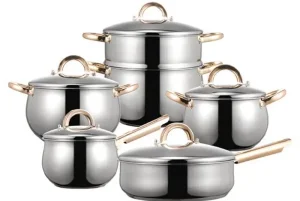
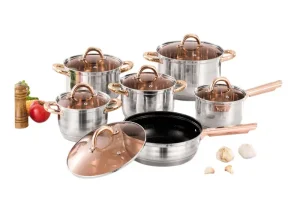
Incorporate riveted or spot-welded athermic handles, tempered steam-vented glass covers, satin internal finishings, and scratch-resistant exterior coatings.
Access to dedicated ready-to-ship (RTS) storage facilities (e.g., our 10,000 m² warehouse) for buffer stock management and flexible container consolidation.
Cookware preferences vary significantly across international markets based on culinary traditions, kitchen equipment standards, and design trends:
Established in 1997 — Chaozhou Chaoan Weihua Hardware and Electrical Appliances Co., Ltd.
Established in 1997, Chaozhou Chaoan Weihua Hardware and Electrical Appliances Co., Ltd. is located in Chaozhou, a beautiful and prosperous city in South China. It owns a modern factory area of 350,000 square feet, operates 35 automated production lines, and employs over 300 highly skilled personnel.
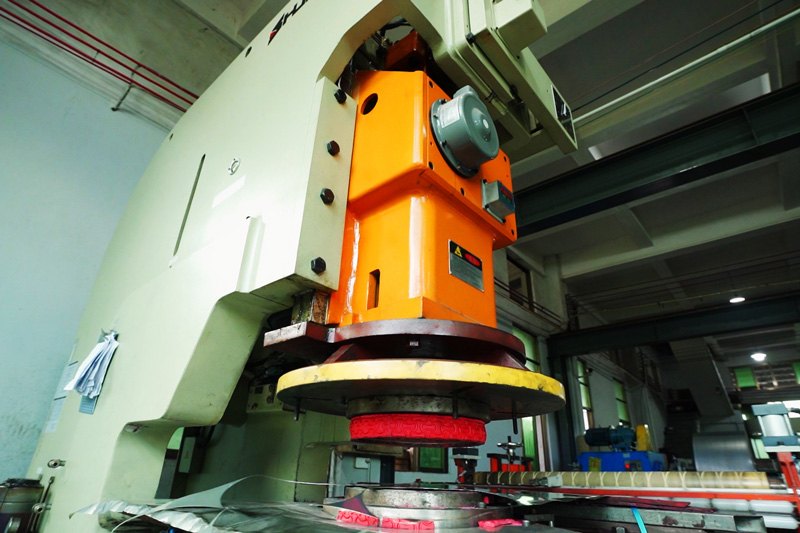
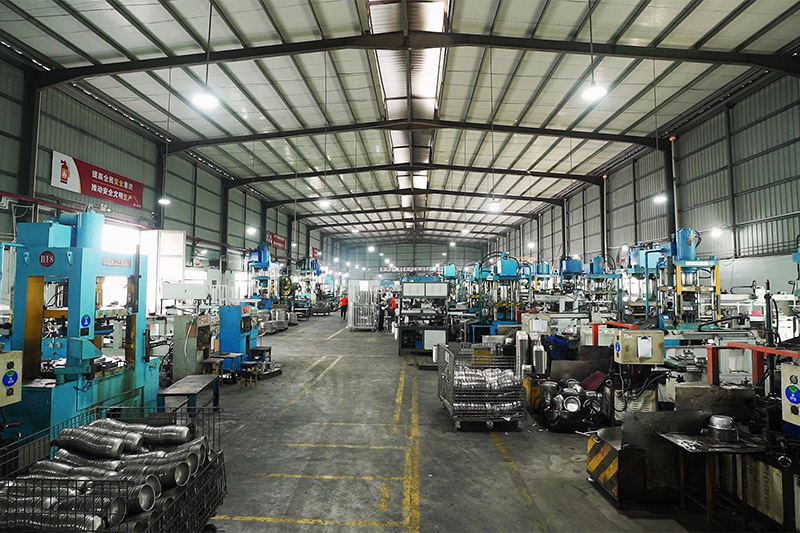
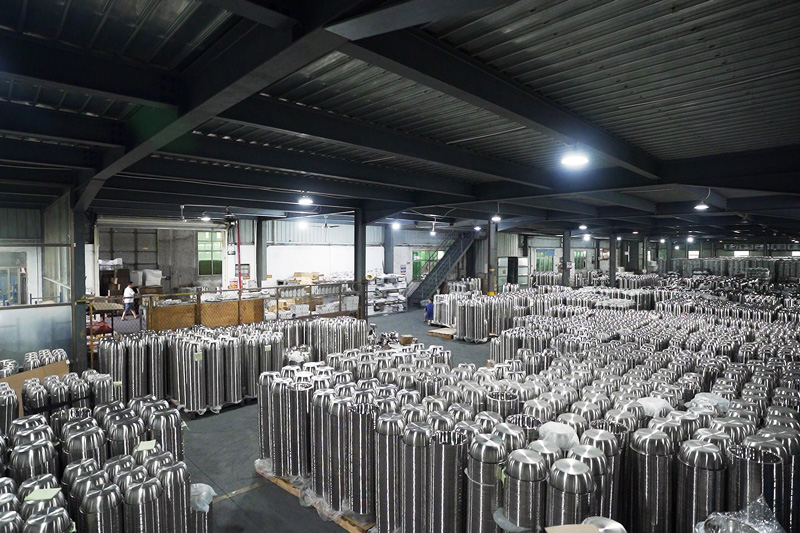
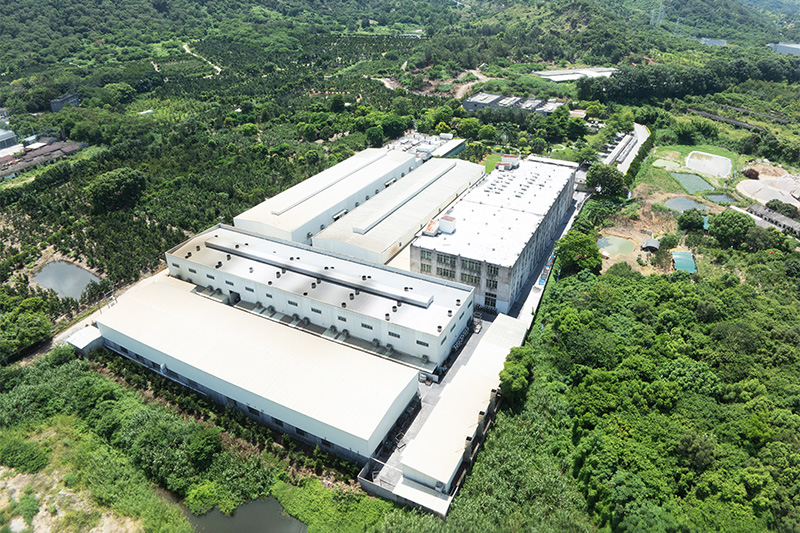
We continuously learn, absorb, and transform, always exploring new possibilities. With a consumer-oriented approach, we are dedicated to enhancing our customers' quality of life.
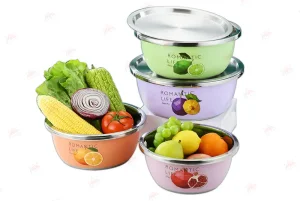
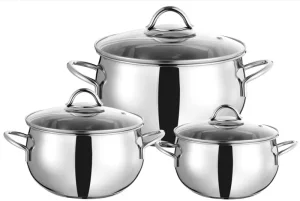
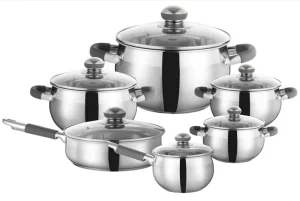
We focus exclusively on manufacturing stainless steel cookware (casserole, steamer, soup pots, frying pan) and bowls (salad bowls, soup bowls, etc.).
Weihua implements strict 6S management to comprehensively improve efficiency, reduce operational waste, and enhance global competitiveness.
Over 60% of our enterprise customers have cooperated with Weihua for more than 10 years, achieving high market share both domestically and internationally.
A Journey of Innovation and Quality Excellence Since 1997
Chaoan Weihua Hardware Factory was officially established.
Officially renamed to Chaozhou Chaoan Weihua Hardware and Electrical Appliance Co., Ltd.
Annual company sales exceeded 100 million yuan milestone.
Factory expanded to over 30,000 square meters with 300+ employees and a 10,000m² RTS warehouse.
Introduced advanced automated equipment: Daily output reached 50,000 mixing bowls & 10,000 pots.
Fully adopted the 6S management system to standardize all manufacturing processes.
Annual sales surpassed 200 million yuan milestone.
Expanded global market strategy, establishing direct worldwide ODM operations.
Verified Quality Assurance Meeting Worldwide Regulatory Standards
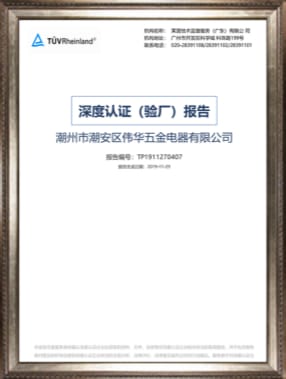
TUV Certified
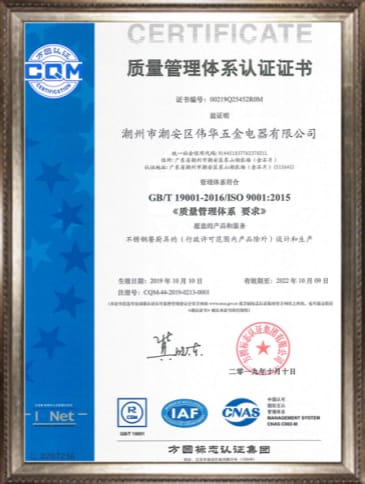
ISO-9001:2015
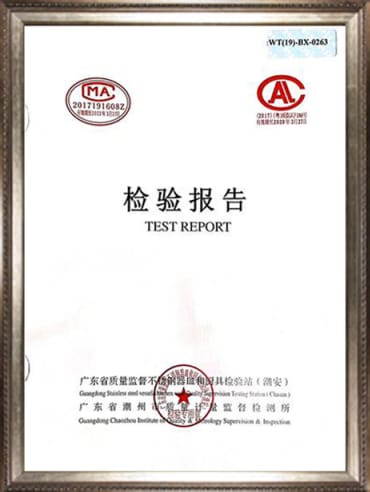
CMA China Quality
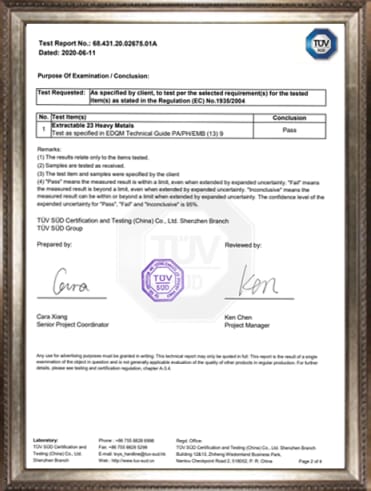
Germany LFGB Approval
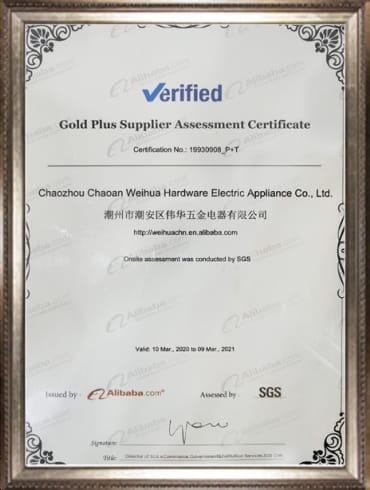
Germany LFGB Compliance
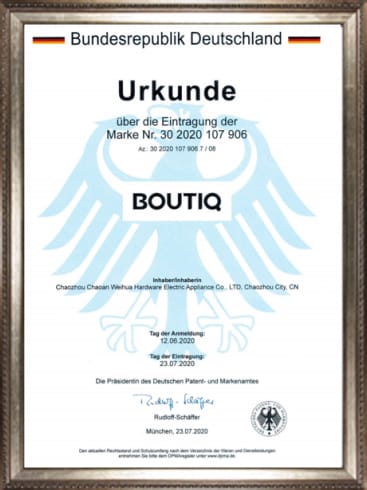
German Trademark: BOUTIQ
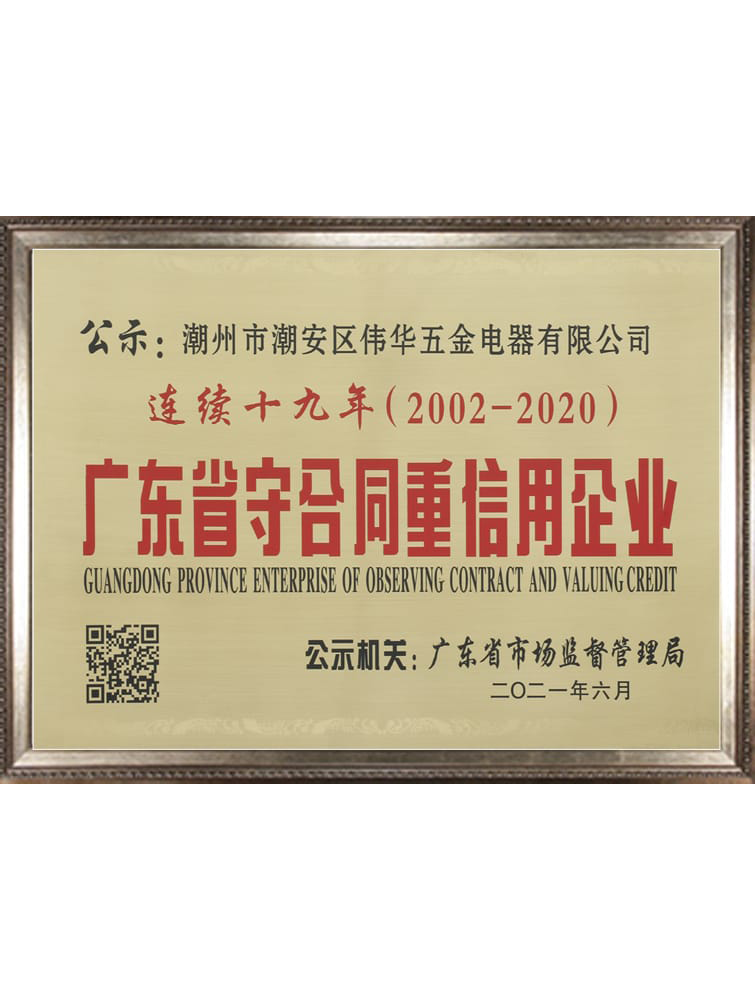
19 Years Contract-Abiding Enterprise
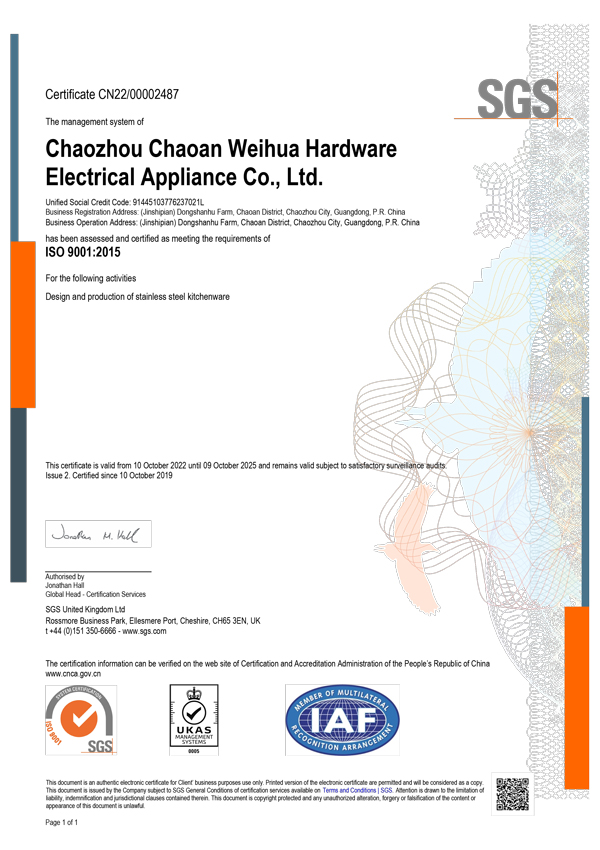
Quality Verified
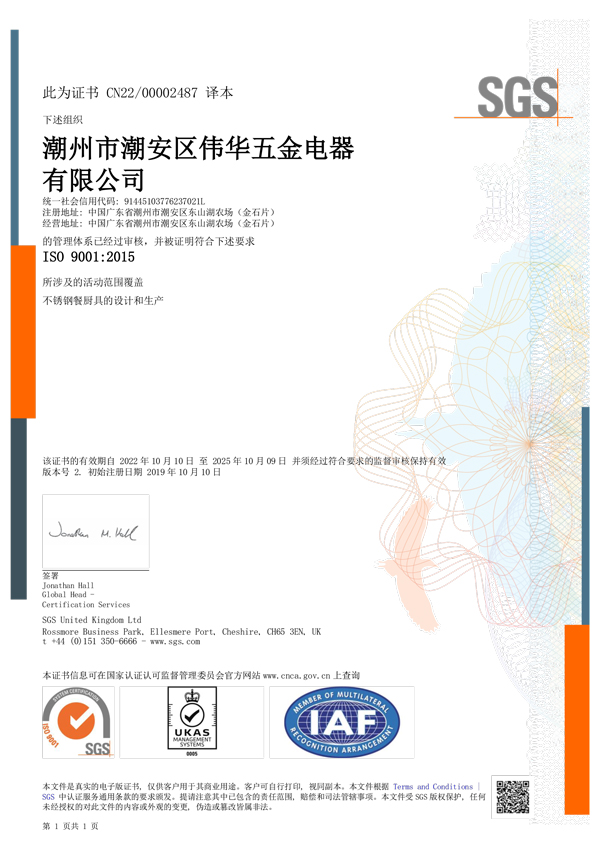
International Standard
Technical Insights for Commercial Buyers, Importers, and Brand Owners
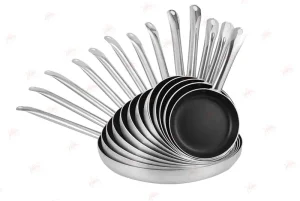
Discover our extended line of multi-ply cookware sets, non-stick honeycomb pans, and premium stockpots.
 Weihua Hardware