Precision-engineered cookware sets, stockpots, and kitchen accessories manufactured to rigorous global food-grade standards.
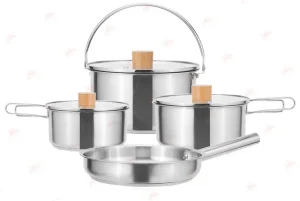
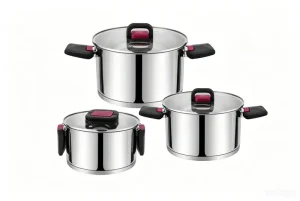
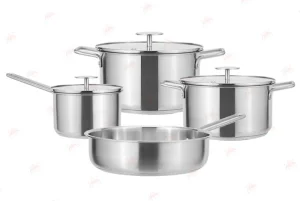
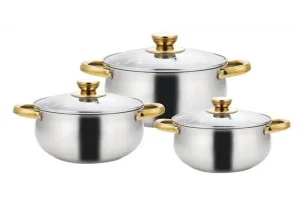
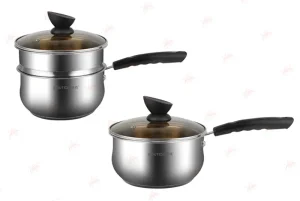
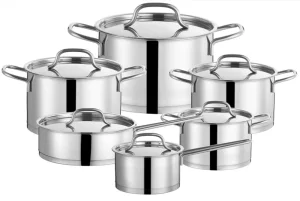
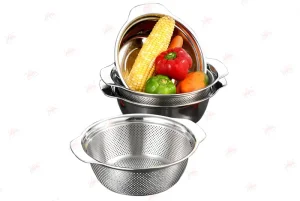
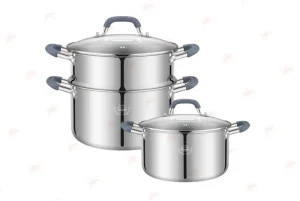
A comprehensive analysis of substrate chemistry, cladding thermodynamics, and international manufacturing standards for global enterprise sourcing.
In the contemporary global cookware market, the selection of raw materials defines not only thermal efficiency and culinary performance but also product longevity, consumer safety compliance, and brand reputation. For Original Design Manufacturers (ODM) and major commercial importers, navigating the complexities of metal alloys, composite cladding techniques, and surface engineering has become a critical strategic objective.
This technical whitepaper explores the material science, manufacturing methodologies, and quality control systems essential for producing high-grade cooking pots. By evaluating key metallurgical formulations—such as Austenitic 304/316 Stainless Steel, Ferritic 430 Magnetic Bases, and Advanced Tri-Ply/5-Ply Clad Composites—B2B buyers gain actionable insights necessary to optimize product portfolios, fulfill international food contact regulations (such as German LFGB and US FDA), and achieve maximum cost-to-performance efficiency.
Understanding how molecular composition, thermal conductivity, and mechanical strength influence cookware functionality across commercial and household environments.
Austenitic stainless steel serves as the benchmark material for high-end cooking pot interiors. Formulated with 18% Chromium and 8-10% Nickel, AISI 304 delivers outstanding resistance to organic acids, oxidation, and pitting corrosion.
For ultra-premium ODM applications, AISI 316 incorporates 2% Molybdenum, vastly upgrading corrosion resistance against highly saline solutions and acidic food prep. Non-reactive and food-safe, austenitic steel ensures zero metallic leaching during prolonged boiling or stewing.
Ferritic stainless steel contains no nickel and exhibits ferromagnetic properties, making it indispensable for modern magnetic induction cooktops. Engineered as the exterior thermal contact layer in multi-ply bottom construction, AISI 430 rapidly absorbs electromagnetic energy from induction hobs.
Its lower coefficient of thermal expansion minimizes warpage under high heat, providing a flat, secure contact surface for maximum energy transfer efficiency.
While stainless steel excels in hygiene and durability, its standalone thermal conductivity is relatively low (~16 W/m·K). To eliminate hot spots and prevent food burning, ODM manufacturers integrate pure aluminum (Al 1050, thermal conductivity ~225 W/m·K) or alloyed aluminum (Al 3003) as an internal thermal distribution core.
Using high-tonnage friction bonding and impact encapsulation, the aluminum core spreads thermal energy rapidly across the vessel's base and sidewalls.
| Material Designation | Thermal Conductivity | Corrosion Resistance | Induction Compatibility | Target ODM Applications | Cost-Benefit Ratio |
|---|---|---|---|---|---|
| 304 Stainless Steel (18/8) | 16.2 W/m·K | Exceptional | Non-magnetic (Base required) | High-end domestic cookware, saucepans, stockpots | High Value / Premium Standard |
| 316 Stainless Steel (18/10 + Mo) | 16.3 W/m·K | Maximum (Acid/Salt resistant) | Non-magnetic (Base required) | Commercial catering, medical/food-grade equipment | Ultra-Premium / Specialized |
| 430 Stainless Steel (18/0) | 25.0 W/m·K | Moderate | Yes (Direct Induction) | Outer encapsulation layer, budget cookware lines | Cost-Effective / Essential |
| Tri-Ply Clad (SS304-Al-SS430) | 150 - 180 W/m·K (Avg) | Exceptional (Interior) | Yes (Full Body Induction) | Professional chef cookware, luxury sets | Optimal Performance Investment |
| 5-Ply Heavy Duty Clad | 190 - 210 W/m·K (Avg) | Maximum | Yes (Full Body Induction) | Heavy-duty stewing, high-heat commercial pots | Elite Commercial Grade |
| Forged Aluminum + PTFE/Ceramic | 205 W/m·K | High (Coating dependent) | Requires Bonded Steel Plate | Non-stick frypans, sauté pans, quick-cooking sets | High Volume / Retail Dominant |
How automated metal stamping, impact bonding, and thermal breaking technology create high-performance cookware.
For single-wall stainless steel vessels, heat distribution is enhanced using an impact-bonded capsule base. Under friction pressures exceeding 2,500 tons, an aluminum disc (typically 3.0mm to 6.0mm thick) is permanently fused between the SS304 pot body and an SS430 protective cap.
This process eliminates air pockets, guarantees uniform heat spreading, and prevents thermal distortion over decades of thermal cycling.
Unlike encapsulated bases where heat is confined to the bottom, 5-ply full-body clad cookware features layered sheet metal extended all the way up the sidewalls. The typical construction includes: SS304 interior → Pure Aluminum → Aluminum Alloy → Pure Aluminum → SS430 magnetic exterior.
This creates a 360-degree thermal envelope, drastically reducing cooking times and enabling precise temperature control for delicate sauces and stews.
Safety and ergonomics are integral to commercial ODM design. Manufacturers deploy three primary handle systems:
Leveraging localized supply chains, automation technology, and strict quality control management systems in Chaozhou, South China.
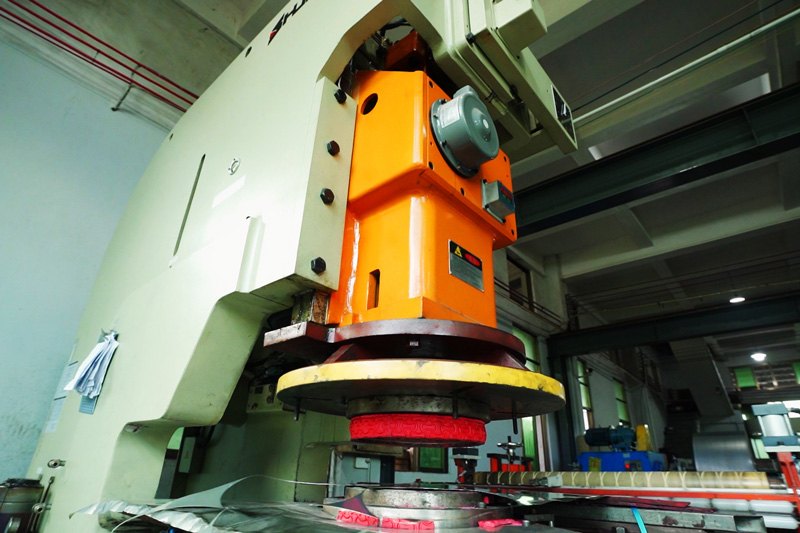
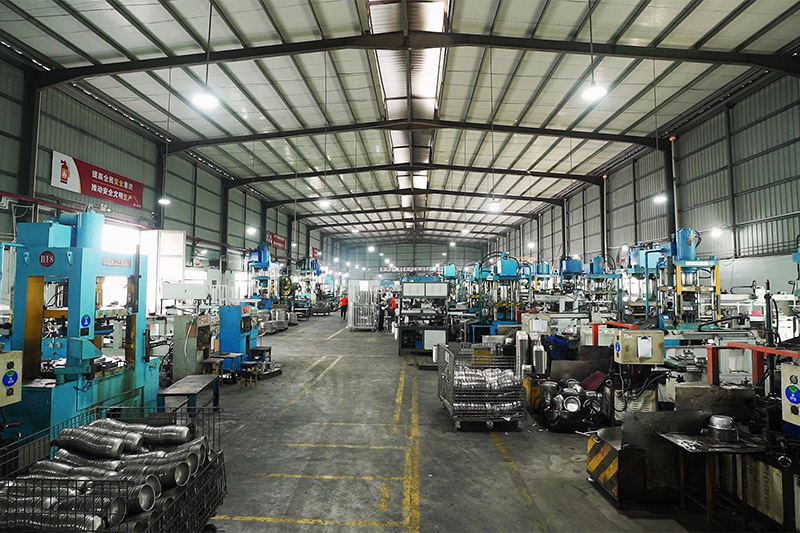
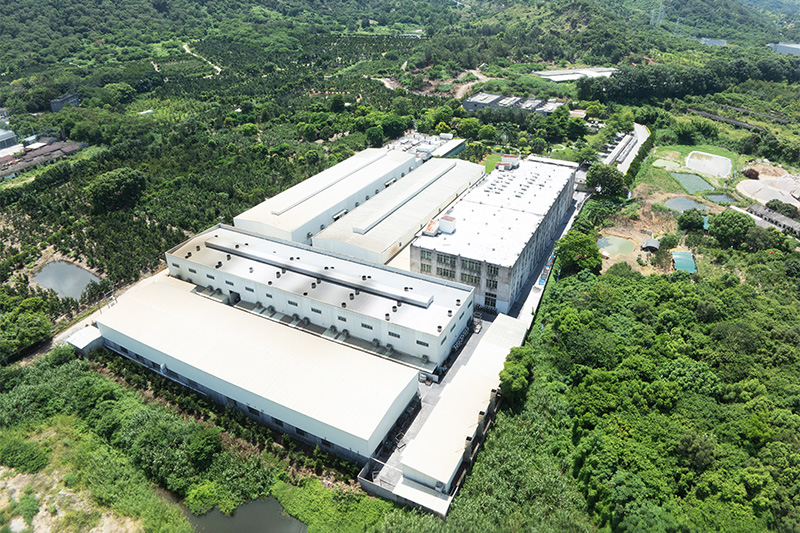
Established in 1997, Chaozhou Chaoan Weihua Hardware and Electrical Appliances Co., Ltd. is located in Chaozhou, a beautiful and prosperous city in South China. Operating a massive manufacturing complex spanning 350,000 square feet, the enterprise houses 35 automated production lines and employs over 300 highly skilled technicians and manufacturing specialists.
With fully integrated deep-drawing stamping presses, high-frequency friction welding machinery, and automated polishing lines, Weihua delivers an extraordinary daily output of 50,000 mixing bowls and 10,000 cookware pots, serving major international brands, hypermarkets, and commercial suppliers globally.
 Weihua Milestones & Growth Trajectory
Chaoan Weihua Hardware Factory was established, laying the foundation for precision cookware manufacturing.
Company name officially changed to Chaozhou Chaoan Weihua Hardware and Electrical Appliance Co., Ltd.
Annual sales revenue surpassed 100 million RMB through domestic and regional expansion.
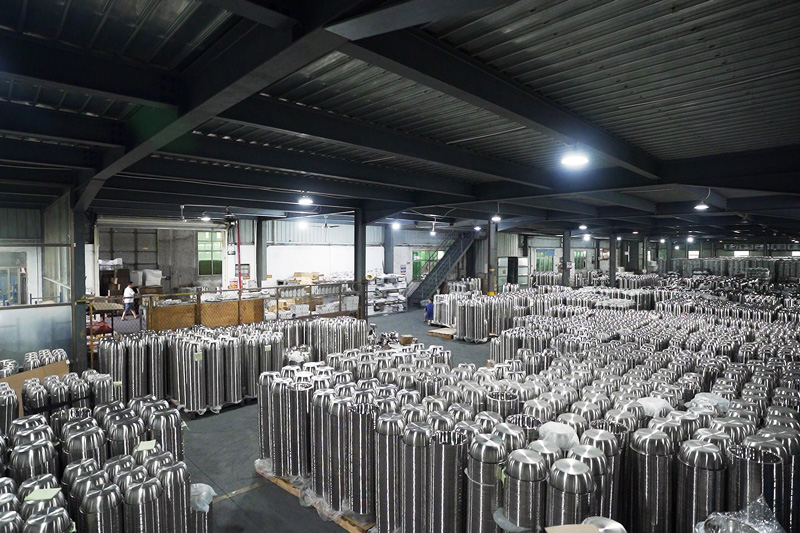
Expanded factory area to over 30,000 sq. meters, employing 300+ staff and constructing a 10,000 sq. meter RTS warehouse.
Introduced state-of-the-art automated production lines, achieving 50,000 bowls and 10,000 pots daily output.
Adopted standardized 6S Lean Management systems to elevate workshop safety, efficiency, and zero-defect quality control.
Annual revenue crossed 200 million RMB despite global market challenges.
Accelerated global OEM/ODM market penetration, launching worldwide international enterprise sales channels.
We continuously explore material enhancements and ergonomic advances. Driven by market-oriented intent, we turn customer concepts into production-ready cookware solutions.
We focus exclusively on stainless steel cookware (casseroles, steamers, soup pots, frying pans) and stainless steel mixing/salad bowls, mastering every production detail.
Comprehensive 6S management optimizes operational workflows, eliminates material waste, shortens lead times, and enhances price competitiveness.
Over 60% of our global clients have partnered with Weihua for more than 10 years, reflecting unmatched consistency and international trust.
How changing consumer cooking habits and regulatory demands influence cooking pot material selection worldwide.
Western markets prioritize LFGB and FDA food safety compliance, PFOA-free coatings, and heavy-gauge construction. German-style straight body cookware with satin-brushed lines and athermic solid bar handles dominate premium department stores.
Additionally, compact 6-piece and 7-piece sets with stackable or foldable handles satisfy urban apartment living and outdoor camping lifestyle trends.
Markets in the Middle East and Latin America display strong demand for large-capacity soup pots, apple-shaped stockpots, and ornate visual accents such as Rose Gold handles and Gold-plated accessories.
Capsule bottom technology is crucial here to prevent hot spots during hours-long simmering of rice, legumes, and traditional stews on high-output gas burners.
Hotel kitchens and industrial caterers require heavy-duty SS304/316 stockpots equipped with spot-welded hollow handles, wide pour rims, and multi-layer encapsulation bottoms.
These vessels undergo intensive dishwashing cycles, thermal shock, and constant impact without losing structural integrity or surface finish hygiene.
Our products are independently audited and certified by international testing institutions to meet global market standards.
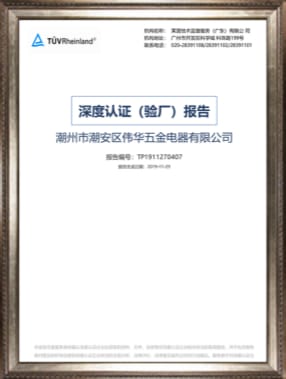
TUV Rheinland Certified
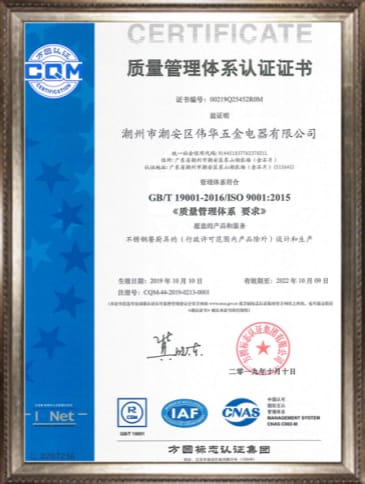
ISO-9001:2015 Quality System
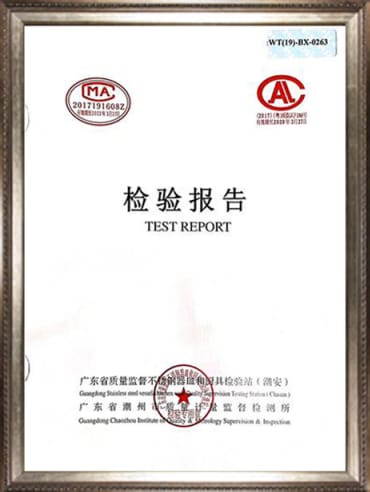
CMA China Quality Standard
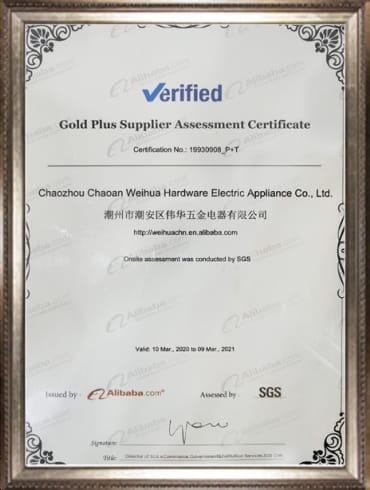
Germany LFGB Food Safe
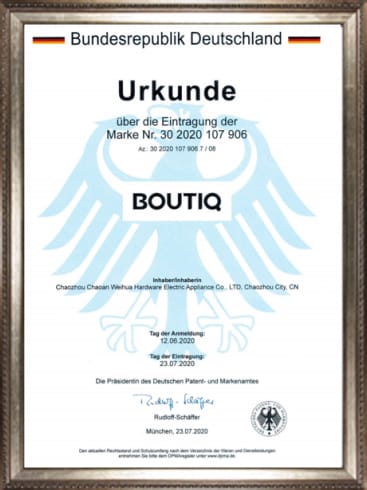
German Trademark: BOUTIQ
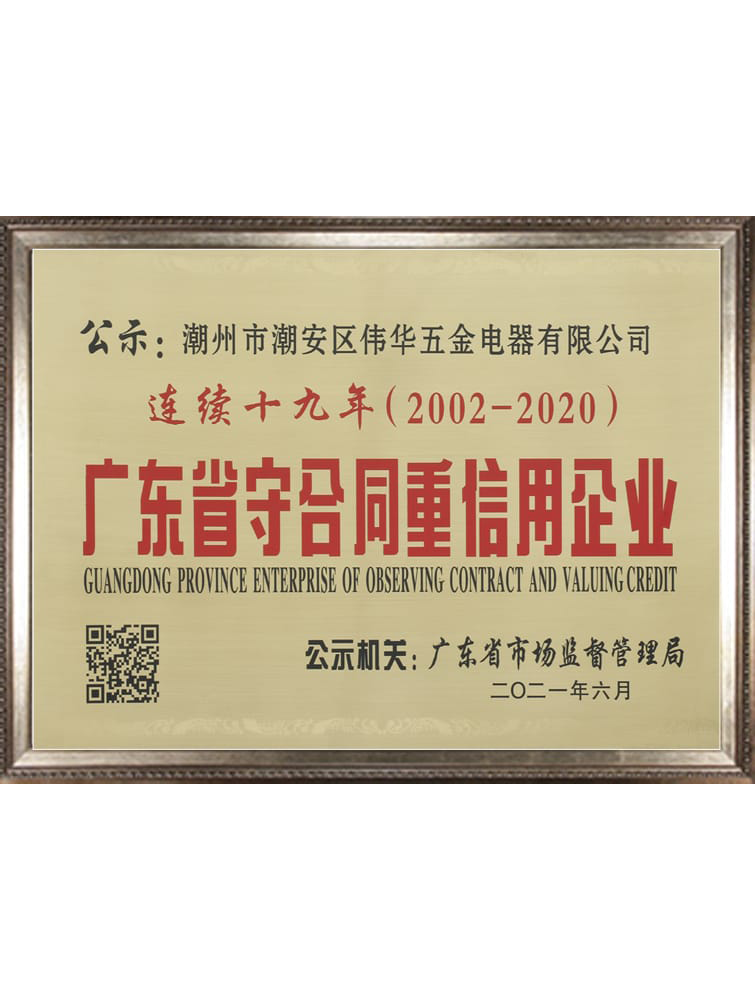
19-Year Contract-Abiding Enterprise
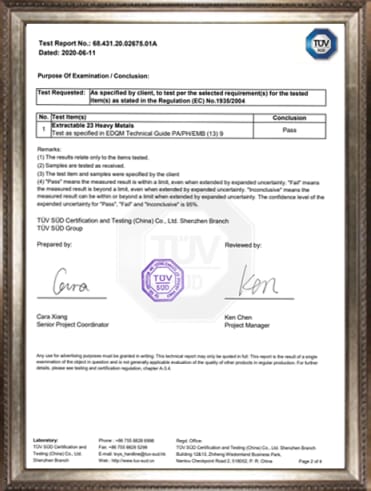
International Food Grade Compliance
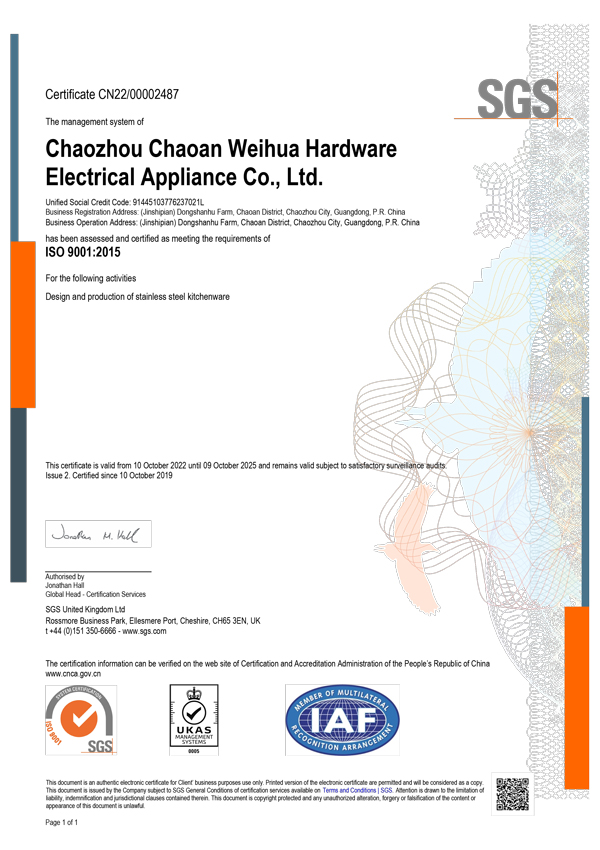
Audit Verified Factory
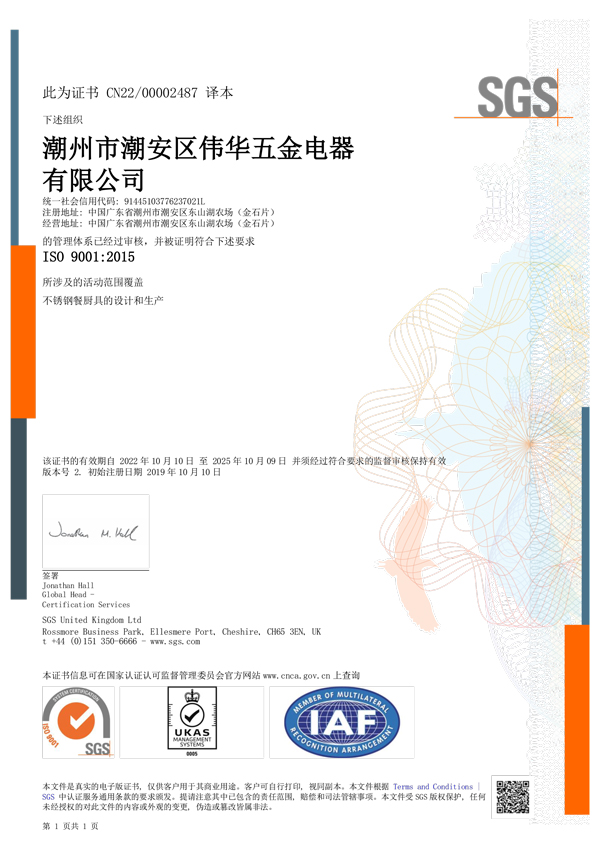
6S Lean Production Certified
Every ODM production batch manufactured at Weihua undergoes a 5-stage quality validation protocol before packaging:
X-ray fluorescence (XRF) testing to verify exact Chromium, Nickel, and Molybdenum chemical composition in incoming raw stainless steel coils.
Continuous 72-hour neutral salt spray exposure (ASTM B117 standard) to guarantee zero rust or pitting formation on pot surfaces.
Heating pots to 300°C followed by immediate cold water quenching to ensure capsule bottom delamination resistance and absolute flat planarity.
Mechanical stress testing applying 150N tensile force and repetitive torque to confirm rivet and spot-weld structural integrity.
Essential criteria for customizing cookware product lines, managing MOQs, and optimizing freight logistics.
Weihua provides end-to-end ODM customization capabilities:
For eCommerce (Amazon FBA, DTC brands) and traditional retail distribution, packaging must withstand rigorous transport conditions. We offer custom 5-ply corrugated color gift boxes, honeycomb eco-friendly protective sleeves, and ISTA-1A drop-test certified master cartons to ensure zero transit damage.
Backed by a 10,000-square-meter RTS (Ready to Ship) raw material warehouse and 35 automated lines, Weihua mitigates raw material price volatility while offering flexible MOQs and stable production cycles (typically 30-45 days for full OEM container orders).
Expert answers to common technical, material, and procurement inquiries from enterprise buyers.
Both 304 (18/8) and 316 (18/10) are food-grade austenitic stainless steels. However, AISI 316 contains approximately 2% Molybdenum, which significantly enhances its resistance to chloride corrosion, salt, and acidic foods. While 304 is the global standard for high-quality residential cookware, 316 is often chosen for premium commercial catering equipment or high-end luxury cookware lines where maximum corrosion defense is required.
Stainless steel has relatively poor heat conductivity on its own. Capsule bottom technology solves this by sandwiching a highly conductive pure aluminum disc (3mm-6mm) between the 304 stainless steel pot body and a 430 magnetic stainless steel exterior plate using 2,500+ tons of friction bonding pressure. This ensures fast, uniform heat distribution across the bottom, eliminates localized hot spots that scorch food, and enables full compatibility with modern magnetic induction cooktops.
Weihua strictly selects certified raw steel coils and food-safe non-stick coatings (PFOA/PFAS-free PTFE or ceramic). Our finished cookware products undergo independent laboratory testing by institutions such as TUV Rheinland and CMA China, verifying heavy metal heavy leaching compliance, chemical inertia, and mechanical safety according to LFGB section 31 and US FDA guidelines.
We offer a wide spectrum of handle configurations tailored to different target market preferences: 1) Athermic Silicone Handles for comfortable, heat-free grips; 2) Foldable Bakelite Handles for compact storage and outdoor camping sets; 3) Cast Stainless Steel Hollow/Solid Bar Handles for sleek modern aesthetics and oven safety; and 4) PVD Electroplated Rose Gold or Champagne Gold handles for luxury gift sets.
Standard ODM manufacturing lead times range from 30 to 45 days after design approval and deposit receipt. MOQs depend on product specifications and tooling requirements, typically starting at 1,000 to 2,000 sets for standard stainless steel cookware lines. Flexible RTS (Ready-to-Ship) options are available for select core models from our 10,000 sqm warehouse.
Yes. Weihua provides comprehensive private-label OEM/ODM services, including bottom laser etching, logo screen printing, custom die-cut color gift boxes, barcode labeling, and Amazon FBA carton preparation compliant with global retail distribution requirements.
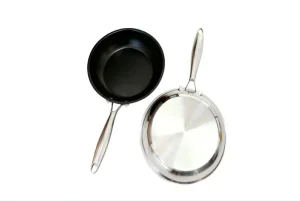
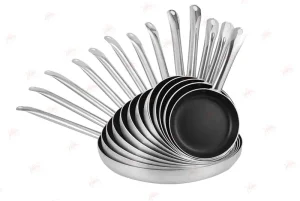
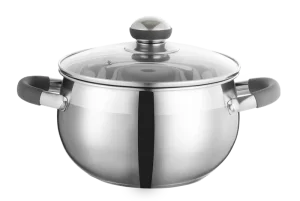
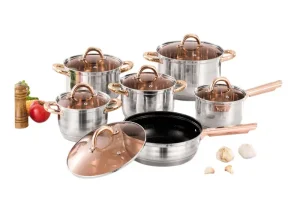
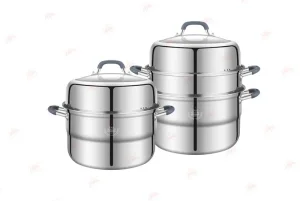
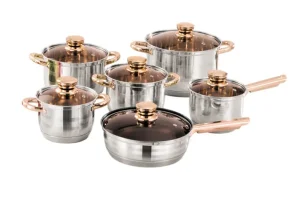
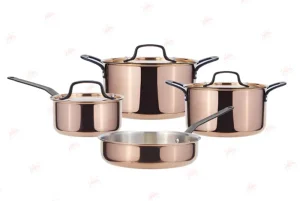
Explore our premium non-stick frypans, multi-layer stockpots, steamers, and rose gold cookware collections.
 Weihua Hardware