Stainless Steel Kitchenware refers to cooking, serving, and food-preparation products made from corrosion-resistant steel alloys. It includes saucepans, frying pans, cutlery, mixing bowls, strainers, sinks, and storage containers. The material is not simply “steel that never stains.” Its performance comes mainly from chromium, which forms a thin, self-repairing oxide layer on the surface.
Under EN 10088 and ISO 15510 classifications, stainless steel contains at least 10.5% chromium. Many household products use Grade 304, often called 18/8 stainless steel because it contains approximately 18% chromium and 8% nickel. Grade 316 offers stronger resistance in chloride-rich environments, although it is less common in ordinary home cookware. World Stainless reported global crude stainless steel production of approximately 58.4 million tonnes in 2023. This scale reflects its importance across food equipment, construction, transport, and household manufacturing.
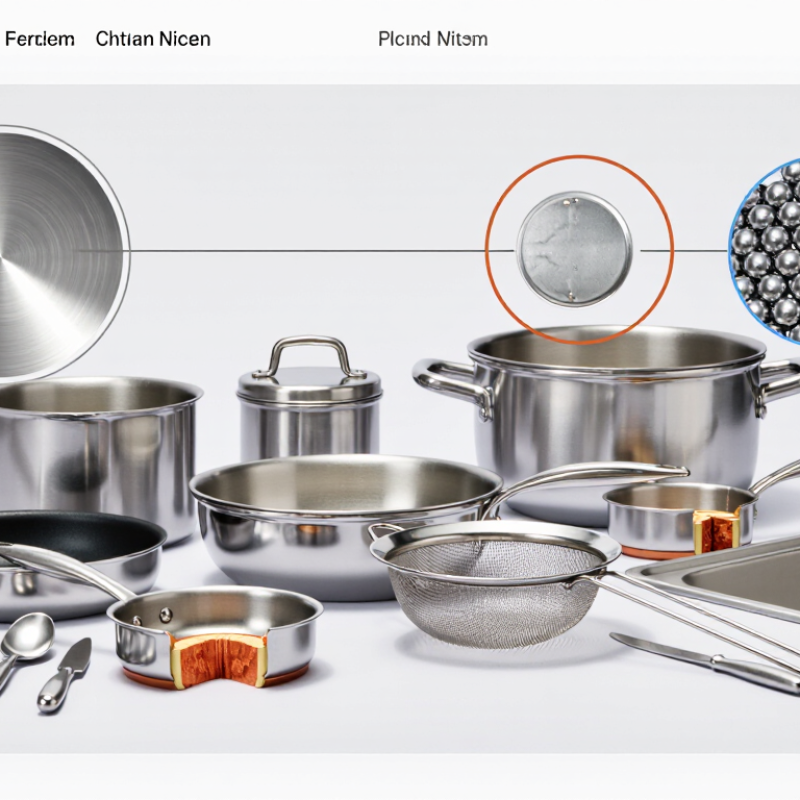
In practical use, good stainless kitchenware feels balanced, resists ordinary dents, and remains easy to clean after repeated heating. However, quality varies. A thin, poorly finished pan may warp, discolor, or distribute heat unevenly. Stainless steel itself transfers heat less efficiently than aluminum or copper, so many cookware products use bonded aluminum or copper cores. That detail is easy to miss.
Food-contact safety also depends on manufacturing quality, surface finishing, and correct cleaning. The Nickel Institute’s food-contact guidance emphasizes suitable grades and controlled processing rather than relying on appearance alone. Stainless Steel Kitchenware is durable, hygienic, and recyclable, but it is not maintenance-free. Salt, bleach, abrasive powders, and prolonged acidic exposure can still damage its surface.
Definition and Overview of Stainless Steel Kitchenware
What Is Stainless Steel Kitchenware?
Definition and Overview of Stainless Steel Kitchenware
Stainless steel kitchenware includes cookware, utensils, bowls, food containers, and other kitchen tools made mainly from a steel alloy. Chromium in the alloy helps form a thin surface layer that resists corrosion. Nickel and other elements may also be included, depending on the steel grade and intended use. The exact composition varies, so “stainless steel” does not describe one identical material.
In everyday kitchens, stainless steel is valued for its firm feel, smooth surface, and ability to handle frequent washing. A saucepan may have a layered base that spreads heat more evenly than a thin, single-layer pan. Spoons and mixing bowls are often lighter and simpler in construction. Useful details matter: check that handles feel secure, edges are smooth, and food-contact surfaces are easy to clean. That matters.
Stainless steel can stain or corrode under certain conditions, especially when salty residue sits on a damp surface. Rinse and dry items after use, and follow any care instructions supplied with the product. A magnet test is not a dependable way to judge quality; some suitable stainless steels are magnetic, while others are not. One small drawback is that lower-cost cookware can heat unevenly, despite its durable-looking exterior.
Composition and Grades of Stainless Steel
Composition and Grades of Stainless Steel
Stainless steel kitchenware is made from iron alloyed with chromium and, in some grades, nickel or molybdenum. Chromium forms a thin protective surface layer, helping the steel resist rust. ASTM International’s A240/A240M specification lists 304 stainless steel at 18–20% chromium and 8–10.5% nickel. Grade 316 contains 16–18% chromium, 10–14% nickel, and 2–3% molybdenum. Grade 430 typically contains 16–18% chromium and no more than 0.75% nickel. These are specified ranges, not a quality ranking.
Grade 304 is common in pots, bowls, and food-contact surfaces because it combines corrosion resistance with good formability. Grade 316’s molybdenum improves resistance to salt-related corrosion, though that added protection may be unnecessary for ordinary dry storage. Grade 430 is magnetic and contains little nickel, but may be less resistant to harsh conditions. The Nickel Institute’s technical guidance explains why alloy composition affects corrosion performance; actual results also depend on surface finish, cleaning, and exposure. A grade label helps, but it cannot tell the whole story. A scratched or poorly maintained surface can still disappoint. Verify the stated grade against the applicable material specification, rather than relying on appearance alone.
Common Types and Uses in the Kitchen
Stainless steel kitchenware covers pots, pans, cutlery, bowls, colanders, and food-storage containers. In everyday kitchens, each type has a distinct job. A heavy-bottomed saucepan suits oatmeal or simmering soup, while a perforated colander drains pasta quickly. Mixing bowls handle whisking, tossing, and prep. Many pieces use chromium-containing steel, which forms a protective surface layer. Some cookware uses layered bases to spread heat more evenly. Check the product’s grade and care instructions; not every stainless-steel item performs alike. Not magic.
Material choice matters, but so does the task. Stainless-steel pans are durable and do not rely on a coating that can scratch. Food may stick if the pan is too cool or dry, though. The Nickel Institute’s technical resources describe nickel’s role in stainless-steel alloys used for demanding applications. For market context, Grand View Research estimated the global cookware market at US$27.71 billion in 2023 and forecast a 6.6% compound annual growth rate from 2024 to 2030. The World Stainless Association reported worldwide stainless-steel production of 58.4 million tonnes in 2023, up 4.6% from 2022. These figures cover broad markets and production, not kitchenware alone. That distinction is easy to miss.
What Is Stainless Steel Kitchenware? – Common Types and Uses in the Kitchen
| Kitchenware Type |
Typical Material or Construction |
Common Uses |
Key Characteristics |
Care Notes |
| Stockpot |
Stainless-steel body; some models have an aluminum or copper core in the base |
Making stock, soup, pasta, and large batches of stew |
Tall sides hold a large volume of liquid; a layered base can improve heat distribution |
Let it cool before washing; soak stuck-on food in warm water |
| Saucepan |
Often stainless steel with a bonded aluminum or copper base |
Heating sauces, cooking grains, and simmering smaller portions |
High sides help reduce splashing; a long handle makes pouring easier |
Use moderate heat for many tasks to limit scorching and discoloration |
| Frying Pan |
Stainless-steel cooking surface; may have a multi-layer, heat-conductive core |
Searing meat, sautéing vegetables, and pan-frying foods |
Uncoated steel can brown food and tolerate high cooking temperatures; it is not inherently nonstick |
Preheat the pan and add cooking fat as appropriate to help reduce sticking |
| Sauté Pan |
Stainless steel, commonly with a layered or clad base |
Sautéing, shallow braising, and finishing dishes in sauce |
Wide flat base and straight sides provide room for food and liquid |
Follow the cookware instructions when using it in an oven; handle temperature limits vary |
| Steamer Insert |
Perforated stainless-steel basket or insert |
Steaming vegetables, fish, and dumplings above simmering water |
Perforations let steam circulate while food stays above the water |
Dry after washing to help prevent water spots |
| Mixing Bowl |
Food-contact stainless steel, often made from 18/8 or 18/10 steel |
Mixing ingredients, whisking, and holding prepared foods |
Lightweight, nonporous, and resistant to rust under normal kitchen use |
Avoid prolonged contact with salt or strongly acidic mixtures when practical |
| Colander |
Perforated stainless-steel sheet or mesh |
Draining pasta and rinsing produce or legumes |
Openings allow water to drain; handles and feet improve everyday handling |
Rinse promptly after starchy foods and clean around perforations |
| Measuring Cup and Spoon Set |
Stainless-steel cups or spoons with stamped or engraved measurements |
Measuring dry ingredients and, where designed for it, liquids |
Rigid construction holds its shape during repeated use |
Check measurement markings before use; markings and capacities vary by set |
Stainless steel kitchenware is valued for its durability, corrosion resistance, and nonporous surface. Heat performance depends on the product’s construction: stainless steel conducts heat less efficiently than aluminum or copper, so many cookware pieces use a conductive core or layered base.
Key Properties and Benefits
Stainless-steel kitchenware is made from iron-based alloys containing chromium, which forms a thin protective surface layer when exposed to oxygen. That layer helps resist rust and everyday food acids. It matters when a saucepan holds tomato sauce or a sink stays damp overnight. Many common pans use 18/8 stainless steel, meaning roughly 18% chromium and 8% nickel. The exact grade and surface finish affect durability, so “stainless” does not mean stain-proof.
The International Stainless Steel Forum’s Stainless Steel in Figures 2024 reports global crude stainless-steel production of about 58.4 million tonnes in 2023. That scale reflects broad industrial use, though it does not guarantee every utensil performs equally. Stainless steel is valued for toughness, a non-porous surface, and compatibility with routine washing.
Easy to maintain.
It also avoids the coating wear that can affect some cookware, but metal utensils may scratch polished surfaces. Salt left in a pan can cause pitting, especially before washing. A small but useful habit: rinse it promptly. These benefits depend on sensible care, and stainless steel can still discolor under high heat.
Care, Maintenance, and Safety Considerations
What Is Stainless Steel Kitchenware?
Care, Maintenance, and Safety Considerations
Stainless steel resists rust, but it is not stain-proof or indestructible. Wash pots, utensils, and food containers with warm water and ordinary dish soap after use. A soft sponge usually removes grease without scratching the surface. Dry items with a clean towel to reduce water spots, especially around rims and handles. Small habits matter.
For stuck-on food, soak the item before scrubbing. Avoid steel wool and harsh scouring powders, which can leave scratches where residue collects. Salt can pit steel if it sits in a wet pan for a long time, so add it to boiling water only after the water heats. Rinse acidic foods from cookware after cooking rather than leaving them stored overnight. It is easy to focus too much on shine; a clean, undamaged surface matters more.
Use oven mitts with hot cookware, since metal handles can become dangerously warm. Let pans cool before washing; sudden temperature changes may warp them. Never heat an empty pan for long, as excessive heat can discolor it or damage its shape. Dishwasher use depends on the item, so check its care instructions. If a surface develops deep pits or a sharp damaged edge, stop using it for food preparation.
Conclusion
Stainless Steel Kitchenware refers to cookware, utensils, storage containers, and other kitchen tools made primarily from stainless steel, an iron-based alloy that contains chromium and may include elements such as nickel. Different grades have varying compositions and characteristics, so choosing suitable pieces depends on their intended use, construction, and care requirements. In the kitchen, stainless steel appears in pots, pans, mixing bowls, cutlery, baking trays, and food-storage items.
Its popularity comes from its strength, resistance to rust and staining, smooth surface, and ability to withstand regular use. Stainless steel is generally easy to clean and does not readily react with many foods, making it a practical choice for everyday cooking and food preparation. To help maintain its appearance and performance, wash items according to their care instructions, dry them to reduce water spots, and avoid cleaning methods that may scratch the surface. Use cookware safely by choosing appropriate utensils and handling hot surfaces with care.

 Weihua Hardware