Choosing the right cookware can change how evenly food cooks, how quickly dinner is prepared, and how long your kitchen tools last. The best option is rarely the most expensive one. It depends on your stove, cooking habits, household size, and cleaning routine. Small details matter.
This guide explores 10 practical tips for choosing the best Types Of Cookware Pots. It compares common materials, including stainless steel, cast iron, carbon steel, aluminum, and ceramic-coated options. Each material handles heat differently. Some pots retain heat beautifully, while others respond faster to temperature changes. A heavy pot may suit slow stews, but it can feel tiring during daily cooking. A lightweight pan may be convenient, yet it can develop hot spots.
Real kitchen experience also reveals overlooked concerns. Handles should stay comfortable and secure near a hot burner. Lids should fit closely without trapping unnecessary steam. Interior coatings need careful utensils and realistic cleaning expectations. Check compatibility with induction, gas, electric, or glass-top stoves before buying. That choice matters.
No cookware set is perfect. I have chosen attractive pots that later proved awkward to store or difficult to clean. That was a useful mistake. Product claims should be checked against material details, manufacturer guidance, warranty terms, and independent reviews. This approach supports safer, more informed decisions without relying on appearance alone. Whether you cook rice, soup, pasta, or delicate sauces, the right pot should match the task. Good cookware earns its place through dependable performance, not a glossy finish.
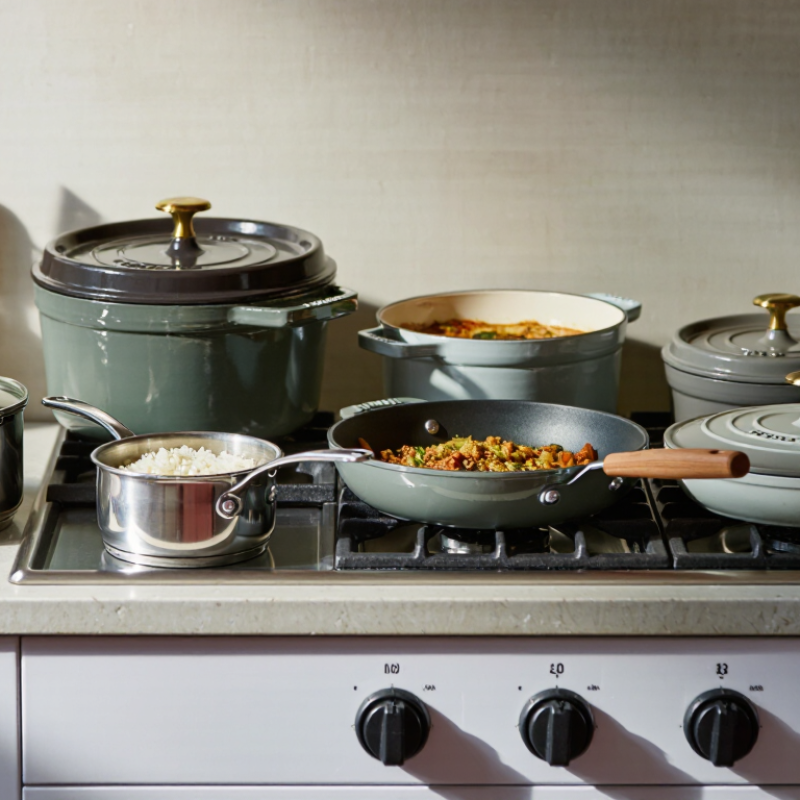
Choosing cookware starts with your actual cooking habits, not a glossy shelf.
I once bought a deep pot for soups, then rarely used it. My small kitchen needed a wide skillet instead. Note your meals for one week. Record whether you fry eggs, simmer beans, steam vegetables, or cook pasta. Also measure your cooktop, storage space, and usual serving size. A two-person household may need a two- to three-quart saucepan, while batch cooking demands larger capacity. These details prevent expensive mismatches.
Match each pot to heat, cooking time, and ingredients. A thick-bottomed saucepan suits oatmeal, sauces, and milk because heat spreads more evenly. A broad sauté pan helps vegetables brown without crowding.
For quick boiling, choose sturdy handles and a lid that sits securely. If you often move cookware from stove to oven, check the stated temperature rating and handle material. Avoid guessing. I have scorched delicate sauce by using high heat in a thin pan, so I now start lower and watch the surface closely. Your cleaning routine matters too. If hand-washing feels unrealistic, complicated shapes may become frustrating.
Think about habits you may change.
A home cook preparing more legumes may value a durable, medium-large pot. Someone making fast breakfasts may need a lightweight pan. Budget matters, but replacement costs matter too. Inspect the base, rivets, lid fit, and balance before buying. Hold the empty pot if possible. It should feel steady, not awkward. I still overestimate how many pans I need. That mistake taught me to choose versatile pieces first, then add specialty cookware only after repeated use proves the need.
Choosing cookware starts with heat behavior, not appearance. Copper conducts about 400 W/m·K, while aluminum reaches roughly 235 W/m·K, according to ASM Handbook material data. Stainless steel commonly measures only 14–16 W/m·K. That difference affects response time and hot spots. Copper heats quickly and evenly. Aluminum is lighter and usually more affordable. Stainless steel resists corrosion and tolerates daily scrubbing. It conducts heat poorly alone, though. A layered base can improve performance.
Cast iron holds heat exceptionally well. Its conductivity is lower than aluminum, near 50–80 W/m·K, depending on composition and temperature. It suits searing and slow cooking. It also feels heavy. Very heavy. Enameled surfaces reduce maintenance, but chipped coatings deserve caution. For durability, compare wall thickness, handle attachment, coating quality, and resistance to thermal shock. The International Organization for Standardization’s ISO 8442 cookware guidance emphasizes functional safety and handle performance, not just appearance. I once chose a thin pan because it heated fast. It warped after repeated high-heat use. That mistake still matters. Match the material to your routine: copper for control, aluminum for responsiveness, stainless steel for resilience, and cast iron for heat retention. These conductivity figures are approximate; alloy, thickness, and construction can change real kitchen results.
Compare Cookware Materials for Heat Performance and Durability
Copper and aluminum spread heat fastest because they have high thermal conductivity. Cast iron and carbon steel provide strong heat retention, while stainless steel offers high heat resistance but transfers heat more slowly. The chart uses approximate room-temperature material properties and normalized indices: heat spreading is based on thermal conductivity, heat retention is based on volumetric heat capacity, and high-temperature resistance is based on melting point. Actual cookware performance also depends on thickness, construction, coatings, and handles.
Choose pot shapes and sizes according to the cooking task, not kitchen fashion. A wide, shallow sauté pot promotes evaporation and browning. Its broad base gives vegetables room to touch the heated surface. A tall stockpot suits pasta, soup, and large batches because it limits splashing. However, an oversized pot wastes heat and water for a small meal.
Tip: Match the base to the burner.
The U.S. Department of Energy reports that induction cooking can transfer about 85% of its energy to cookware, compared with roughly 32% for gas. That efficiency still depends on a flat, correctly sized base. Choose a pot close to the burner diameter. A small saucepan, about 1 to 2 quarts, handles sauces, grains, and reheating. A 3- to 5-quart pot fits everyday soups and vegetables. For family pasta or stock, 6 to 8 quarts provides useful headroom.
Tip: Leave space for movement.
A deep, narrow pot reduces splashes but may heat slowly at the upper walls. A wider Dutch-oven shape supports braising because food can sear before liquid is added. USDA guidance recommends heating poultry to 165°F, so a pot’s shape should support steady, measurable heating rather than appearance alone. Glass lids help monitor simmering, though they can fog. I sometimes choose a pot that is slightly too large; it feels flexible, but cleanup and heating become less efficient. That choice deserves reconsideration.
Reports: U.S. Department of Energy, Energy Saver; USDA FSIS, Safe Minimum Internal Temperatures.
A good cookware pot should feel rigid, not flimsy, when lifted from a shelf. Look for a thick, evenly bonded base and walls without sharp finishing marks. The FDA Food Code 2022 requires food-contact surfaces to be smooth, durable, corrosion-resistant, and easy to clean. That is a useful professional benchmark for home buyers.
Handles deserve a practical test. Grip the pot with a dry towel, then check whether the handle twists, heats quickly, or pulls your wrist forward. Small details matter. Riveted handles often feel secure, but they can trap residue around the joints. I once ignored that area and regretted it after repeated cleaning. A lid should sit firmly, release steam safely, and have a knob that remains comfortable during slow cooking. Glass lids help visibility, though they can add weight and create breakage concerns.
Compatibility also affects construction value. Check whether the base works with gas, electric, ceramic, or induction cooking.
However, the pot must contain magnetic material, or the induction surface will not heat it. Test with a magnet before buying. The U.S. Department of Energy also notes that flat, level bases improve contact and heating efficiency. My own mistake was assuming every “stainless” pot worked on induction. It did not.
Check Safety, Maintenance Requirements, and Overall Value
Choose pots with firmly attached handles, balanced weight, and a flat, stable base. Check the base. It should sit evenly on your cooker without rocking. For oven use, confirm the temperature limit for every part, including the lid and handle. Avoid cookware with peeling surfaces, deep scratches, loose fittings, or rough edges. These defects can affect safety and shorten the pot’s useful life.
Consider how much care you can realistically provide. Some materials tolerate gentle dishwasher cycles, while others need hand washing and immediate drying. Read the care instructions before buying. Sudden temperature changes can warp a hot pot, so let it cool before adding cold water. If a surface requires seasoning, test your routine with a small amount of oil. I sometimes rush this step, and food sticks more than expected. Maintenance is part of the price.
Evaluate value through repeated use, not appearance alone. A slightly heavier pot may distribute heat more evenly and reduce scorching during slow cooking. Check whether the lid seals well, the handle stays comfortable, and replacement parts are available. Measure your storage space, too. An oversized pot can become an expensive decoration. Compare the expected lifespan with the purchase cost and cleaning effort. Low price is not always economical. High price is not proof of quality. Think about your meals, cooking habits, and patience. That judgment is personal.
Choose a wide, shallow sauté pot. Its broad base gives vegetables more contact with heat. This supports browning and evaporation.
Use a tall stockpot with enough headroom. It reduces splashing during boiling. A 6- to 8-quart size suits family portions.
A 1- to 2-quart saucepan handles sauces, grains, and reheating. A 3- to 5-quart pot fits everyday soups and vegetables. Bigger is not always better.
Choose a flat base close to the burner’s diameter. An undersized base wastes heat around the edges. An oversized pot may heat slowly.
Choose a wider, heavy pot with a flat cooking surface. Food can sear before liquid is added. A deep, narrow pot reduces splashes but may heat slowly near the upper walls.
Look for rigid walls, an evenly bonded base, and smooth finishing. Food-contact surfaces should be durable, corrosion-resistant, and easy to clean. Sharp marks are warning signs.
Grip the handle with a dry towel. Check for twisting, quick heating, or wrist strain. The lid should sit firmly and release steam safely. Small details matter.
No. The pot needs magnetic material and a flat, level base. Test it with a magnet before buying. I once assumed every stainless pot worked, but that was wrong.
Choosing the right Types Of Cookware Pots begins with understanding your cooking routines, favorite recipes, and available kitchen space. Consider whether you mainly prepare soups, sauces, pasta, steamed foods, or slow-cooked meals, then select materials according to heat distribution, responsiveness, durability, and weight. Different pot shapes and capacities serve different purposes, so a versatile collection should include sizes suitable for everyday portions as well as larger meals.
Construction quality is equally important. Look for secure handles, well-fitting lids, balanced weight, and compatibility with your cooking surface. Safety and convenience should also guide your decision: check heat resistance, stable construction, easy-clean surfaces, and care instructions before buying. Some materials may require gentle cleaning or special maintenance, while others are designed for faster everyday use. By comparing performance, practicality, lifespan, and overall cost, you can choose cookware that matches your habits and delivers dependable results without unnecessary expense.

Weihua Hardware