Choosing among Cookware Pan Types is less about owning a complete set and more about matching each pan to the meals you actually cook. A skillet handles quick browning, while a saucepan makes room for oatmeal, sauces, and small batches of soup. A heavy Dutch oven holds steady heat for braises, though it can feel like overkill on a busy weeknight. The right choice depends on your stove, cooking habits, storage space, and willingness to maintain the material.
Food writer and cookware tester J. Kenji López-Alt is known for practical, evidence-based kitchen testing. A useful principle drawn from that approach is: “Choose the pan for the job, not the shelf.” Treat this as a guide, not a universal rule. Stainless steel can build flavorful browned bits, but delicate eggs may challenge an inexperienced cook. Nonstick pans release food easily, yet their coatings need gentler tools and care. Cast iron can sear beautifully, but it is heavy and asks for more upkeep. Trade-offs matter.
This guide compares pan shapes, materials, heat performance, and everyday care, so you can choose with clear expectations. Think about what lands on your burner most often: a fried egg, a bubbling tomato sauce, or vegetables that need a hard sear. Start there. Even careful advice has limits; a pan that works well in one kitchen may frustrate someone with different habits, heat settings, or storage space.
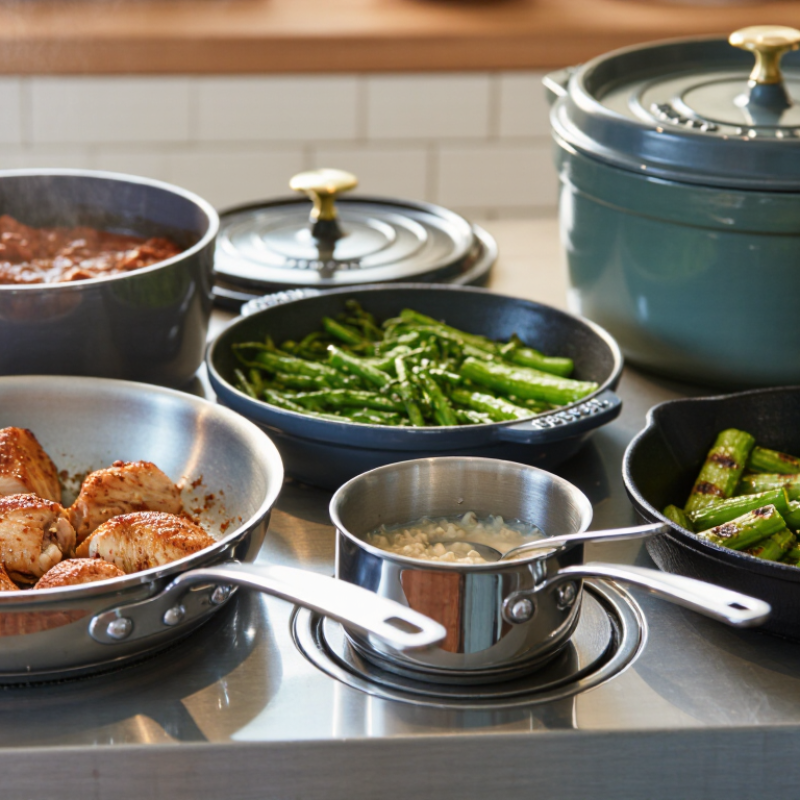
Choosing a pan starts with the food you cook most often. Stainless steel pans suit browning meat, sautéing vegetables, and making pan sauces. They tolerate higher heat, but food may stick if the pan is crowded or insufficiently preheated. Cast iron holds heat well, making it useful for searing and oven cooking. It is heavy, though, and needs careful drying to limit rust. Nonstick pans release eggs and delicate fish easily, while carbon steel offers a lighter, responsive option for searing. Each has trade-offs.
Tips: Match the pan to the task, not just its appearance. Use a flat-bottomed pan that sits steadily on your stove. For nonstick surfaces, choose moderate heat and utensils that will not scratch the coating. Check the maker’s care instructions, especially before putting any pan in the oven.
A small kitchen may need only two or three versatile pans. A stainless steel skillet and a nonstick pan cover many everyday meals; cast iron is useful if you often cook over high heat. The “best” set is not always the largest. Pan performance can vary with stove type, thickness, and handling, so a chart cannot predict every result. That part takes practice.
How to Choose the Right Cookware Pan Types?
Matching pan materials to heat, food, and cooking methods makes cooking more predictable. I learned this after burning onions in a thin pan. Material changes how quickly a pan heats, holds temperature, and reacts to adjustments.
Stainless steel suits searing meat, browning mushrooms, and making pan sauces. It tolerates high heat and offers useful visual clues through browning. Preheat it gradually, then add oil before the food. Eggs may stick without enough fat or proper temperature control. This remains a skill, not a material failure.
Cast iron stores heat for frying, roasting, and crisping potatoes. It works well when steady heat matters. However, it feels heavy and responds slowly when the burner changes. Enameled versions handle acidic foods more comfortably, while seasoned surfaces need careful drying. Carbon steel heats faster and develops a naturally slick surface, but it needs regular maintenance.
Nonstick pans are practical for eggs, pancakes, and delicate fish. Use moderate heat and soft utensils to protect the cooking surface. They are not ideal for intense searing. Copper responds quickly, helping with sauces that need precise temperature changes, though it requires compatible construction and careful cleaning. I still choose the wrong pan sometimes. That mistake teaches more than a label.
| Pan Type | Typical Material | Heat Response | Best Foods | Recommended Cooking Methods | Key Advantages | Care and Limitations |
|---|---|---|---|---|---|---|
| Frying Pan | Stainless steel, carbon steel, cast iron, or nonstick-coated aluminum | Varies by material; aluminum heats quickly, while cast iron heats slowly but retains heat well | Eggs, vegetables, meat, fish, pancakes, and sautéed ingredients | Frying, sautéing, searing, browning, and shallow cooking | Versatile shape with a broad, flat cooking surface and sloped sides | Uncoated surfaces may require seasoning or sufficient oil; nonstick coatings usually require moderate heat |
| Sauté Pan | Stainless steel, aluminum, or clad metal | Usually responsive and consistent; thick bases improve heat stability | Chicken pieces, vegetables, grains, sauces, and foods that need frequent stirring | Sautéing, searing, braising, pan-roasting, and reducing sauces | Flat base and straight sides provide more capacity and help contain liquids | Heavier than a frying pan; stainless steel may need preheating and oil to reduce sticking |
| Saucepan | Stainless steel, aluminum, copper, or enameled metal | Small diameter concentrates heat; thick construction helps prevent scorching | Soup, sauces, custard, rice, pasta portions, and boiled vegetables | Boiling, simmering, reheating, melting, and sauce preparation | Tall sides reduce splashing and evaporation while the long handle improves control | Thin pans can create hot spots; delicate sauces require low to medium heat and regular stirring |
| Stockpot | Stainless steel, aluminum, or enameled steel | Large volumes heat gradually; a thick base helps distribute heat | Stock, soup, pasta, seafood, beans, and batch cooking | Boiling, simmering, blanching, steaming, and large-batch cooking | High walls provide substantial capacity and help limit splashes | Large pots are heavy when full; use an appropriate burner and avoid rapid boiling for delicate foods |
| Cast-Iron Skillet | Bare cast iron or enamel-coated cast iron | Slow to heat but excellent heat retention and strong searing performance | Steak, burgers, roasted vegetables, cornbread, and oven-finished dishes | Searing, frying, roasting, baking, and stovetop-to-oven cooking | Highly durable, oven-capable, and effective for high-heat browning | Bare cast iron needs drying and seasoning; acidic foods can affect the seasoning layer during prolonged cooking |
| Carbon-Steel Pan | Carbon steel with a seasoned cooking surface | Heats faster than cast iron and responds more quickly to temperature changes | Stir-fry, eggs, vegetables, meat, fish, and foods requiring high-heat searing | Stir-frying, sautéing, searing, frying, and wok-style cooking | Lighter than cast iron, naturally improves with seasoning, and supports high heat | Requires seasoning and thorough drying; prolonged cooking of acidic ingredients may weaken the seasoning |
| Nonstick Fry Pan | Coated aluminum or coated stainless steel | Heats quickly; coating performance is best maintained at low to medium heat | Eggs, pancakes, delicate fish, tofu, and foods with little added fat | Low-fat frying, gentle sautéing, reheating, and delicate-food cooking | Easy food release and simple cleanup with minimal oil | Use utensils recommended for the coating; avoid overheating and abrasive cleaning; coating lifespan is finite |
| Wok | Carbon steel, cast iron, or stainless steel | Carbon steel responds quickly; the curved base creates hotter and cooler cooking zones | Vegetables, noodles, rice, thinly sliced meat, seafood, and aromatics | Stir-frying, deep-frying, steaming, braising, and quick sautéing | High sides support tossing and allow ingredients to move between heat zones | Round-bottom models may require a wok ring; carbon steel must be seasoned and dried after washing |
| Grill Pan | Cast iron, enameled cast iron, or hard-anodized aluminum | Cast iron retains high heat well; ridges take longer to preheat evenly | Steak, chicken, vegetables, sandwiches, and firm fish | Indoor grilling, searing, and creating grill marks | Raised ridges lift food above rendered fat and create distinctive seared lines | Ridges can be difficult to clean; use adequate preheating and avoid overcrowding to limit steaming |
| Roasting Pan | Stainless steel, aluminum, carbon steel, or enameled metal | Broad surfaces heat steadily; thick metal improves browning and stability | Whole poultry, large cuts of meat, root vegetables, and baked casseroles | Oven roasting, baking, braising, and collecting cooking juices | Large capacity and sturdy construction suit high-temperature oven cooking | Choose dimensions that allow airflow around food; very large pans may be cumbersome to handle when full |
| Copper Pan | Copper, usually lined with stainless steel or tin | Extremely responsive and highly conductive, allowing precise temperature adjustments | Caramel, custard, sauces, jams, fish, and other temperature-sensitive foods | Gentle simmering, sauce-making, melting, sautéing, and controlled cooking | Exceptional control over heating and cooling | Unlined copper can react with acidic foods; lined surfaces require care and may have temperature limitations depending on the lining |
| Ceramic Baking Dish | Glazed ceramic or stoneware | Heats gradually and retains heat well, but responds slowly to temperature changes | Casseroles, baked pasta, gratins, cobblers, and desserts | Baking, slow roasting, reheating, and serving | Retains heat for serving and distributes moderate oven heat gently | Avoid sudden temperature changes; check the manufacturer’s oven and broiler guidance before use |
Choosing the Right Cookware Pan Types?
Pan shape should match the food, not just your cabinet space. A 20-centimeter sauté pan suits eggs, vegetables, and quick sauces. Its wide base supports even contact with the burner. A deeper saucepan works better for rice, soup, and reducing liquid. For frying, choose a broad, shallow pan with gently sloped sides. This makes turning food easier and reduces crowding. The U.S. Department of Energy advises matching the pan base to the electric heating element. A smaller base wastes heat.
Capacity depends on portions and cooking movement. For one or two people, a 1.5-to-2-liter saucepan is usually practical. A 3-to-4-liter pan gives space for pasta, stew, or meal preparation. USDA MyPlate guidance recommends filling half the plate with fruits and vegetables. That can mean more bulky ingredients than expected. I often choose too small a pan, then regret it when spinach collapses unevenly. More capacity is not always better, though. Oversized pans can heat slowly and feel awkward.
Tips: Measure the burner first. Check the pan’s flat base. Leave one-third of the space empty for stirring. For family meals, choose capacity before appearance. If you cook irregularly, record which pan felt cramped. This small habit is imperfect, but useful. Consider the handle length, storage height, and filled weight before buying. A pan that looks efficient may become uncomfortable after adding water, vegetables, and sauce.
Choosing a pan is less about appearance than the time it demands after cooking. The U.S. Bureau of Labor Statistics’ 2023 American Time Use Survey recorded about 0.67 hours daily for food preparation and cleanup. That makes maintenance a practical cost.
A nonstick pan usually needs soft tools, gentle washing, and careful storage. It releases eggs easily, but scratches can end its useful life sooner. Stainless steel tolerates high heat, metal utensils, and vigorous scrubbing. It can also punish rushed cooking with stuck rice or browned sauce.
Cast iron offers excellent heat retention and long service when seasoned correctly. However, it needs drying immediately and occasional oiling. Moisture is the enemy. The U.S. Food and Drug Administration’s 2022 Food Code emphasizes food-contact surfaces that are durable, smooth, and easily cleanable.
That standard supports a simple test: can you clean the pan completely without special rituals? Aluminum heats quickly and feels light, yet softer surfaces may dent or discolor. I still prefer heavier pans for searing, though lifting them with wet hands is inconvenient.
No choice is perfect. Cooking habits matter more than claims on packaging. A careful cook may keep nonstick cookware for years, while a rushed household may value stainless steel’s forgiveness. Inspect handles, rivets, coating wear, and base stability before buying. Small details decide daily convenience.
A useful cookware collection begins with your cooking habits, not a crowded cabinet. If you often cook eggs, vegetables, or fish, choose a dependable nonstick frying pan. Its smooth surface supports delicate foods and easier cleanup. A stainless steel skillet suits browning, searing, and pan sauces. I use one for chicken because its broad base gives food room to color. Still, it needs proper preheating and enough oil.
A medium saucepan handles oatmeal, rice, soup, and reheated sauces. Choose one with a comfortable handle and a lid that fits securely. A heavier pot helps distribute heat more evenly.
For larger meals, a deep stockpot becomes useful, especially for pasta or family-sized stews. You may not need both a sauté pan and a large skillet. They can overlap.
Keep it manageable. Before buying, check whether each pan matches your stovetop and oven needs. Cast iron retains heat well but feels heavy and may require careful drying. Stainless steel is durable, though food can stick when the temperature is poorly controlled. Nonstick cookware is convenient, but its coating needs gentle utensils and moderate heat. I once bought an oversized pan that rarely fit my sink. That was not entirely wise. Storage space, washing routines, and your usual serving size deserve equal attention. A smaller, well-used collection often works better than an impressive stack.
Stainless steel handles high heat well and shows browning clearly. Preheat gradually. Add oil before the food. Eggs may stick.
Cast iron stores heat for frying, roasting, and crisping potatoes. It suits steady cooking. It feels heavy and changes temperature slowly.
Dry it immediately after washing. Apply a thin layer of oil sometimes. Moisture is the enemy. I still forget occasionally.
Yes. They work well for eggs, pancakes, and delicate fish. Use moderate heat and soft utensils. Avoid intense searing.
Scratches can shorten its useful life. Store it carefully. Gentle washing matters. Convenience has a trade-off.
Carbon steel heats faster than cast iron and can develop a slick cooking surface. It needs regular maintenance. Dry it well.
Copper responds quickly to temperature changes. It helps with delicate sauces. Compatible construction matters. Cleaning requires care.
Inspect the handle, rivets, coating, and base stability. Try lifting it safely. Wet hands make heavy cookware risky.
It tolerates high heat, metal utensils, and vigorous scrubbing. It may punish rushed cooking with stuck rice. Patience helps.
Choose based on your routine, not appearance. A careful cook may protect nonstick cookware for years. No choice is perfect.
Choosing the right Cookware Pan Types starts with understanding how each pan is designed to perform. Frying pans are useful for searing and sautéing, saucepans support simmering and reheating, while stockpots are ideal for soups, pasta, and larger meals. Material also matters: stainless steel offers durability and versatility, cast iron retains heat well, nonstick surfaces support low-fat cooking, and copper responds quickly to temperature changes. Selecting a pan based on the food, heat level, and cooking method can make everyday preparation more efficient.
Shape, size, and capacity should match both your recipes and available storage space. A practical collection may include a versatile skillet, a medium saucepan, and a larger pot, with additional specialty pans added only when needed. Consider handle comfort, weight, cleaning requirements, oven compatibility, and long-term durability before buying. The best cookware setup balances performance, maintenance, and convenience, helping you cook confidently without filling your kitchen with unnecessary pieces.
Weihua Hardware