Choosing the right Stainless Steel Cooking Pan Set involves more than comparing polished surfaces and attractive prices. Buyers need reliable construction, balanced handling, compatible lids, and practical heat control. A pan may look premium online, yet develop hot spots on a real stovetop. That difference matters when searing chicken, reducing sauce, or preparing delicate eggs.
Industry research supports the category’s continuing importance. Grand View Research’s cookware market analysis identifies stainless steel as a durable material used across household and professional kitchens. Fortune Business Insights also reports steady growth in the global cookware market, driven by replacement demand, home cooking, and improved kitchen equipment. However, market estimates vary between research firms. That inconsistency deserves attention, not blind acceptance.
This Top 10 guide evaluates each set through measurable, everyday criteria. These include steel grade, thickness, tri-ply or multi-ply construction, handle stability, oven tolerance, cleaning effort, and warranty coverage. We also consider how evenly each pan responds to changing heat. Small details matter. A riveted handle can feel secure but collect residue. A mirror finish can look elegant but reveal fingerprints quickly. Some sets perform beautifully on induction, while others need careful temperature management.
The recommendations are designed for different budgets and cooking habits. They are not based only on brand reputation. Product specifications, manufacturer documentation, safety guidance, and credible consumer testing all influence the rankings. No set is perfect. Even the most expensive option may disappoint users who dislike handwashing or frequent polishing. This guide aims to make those compromises visible before you buy.
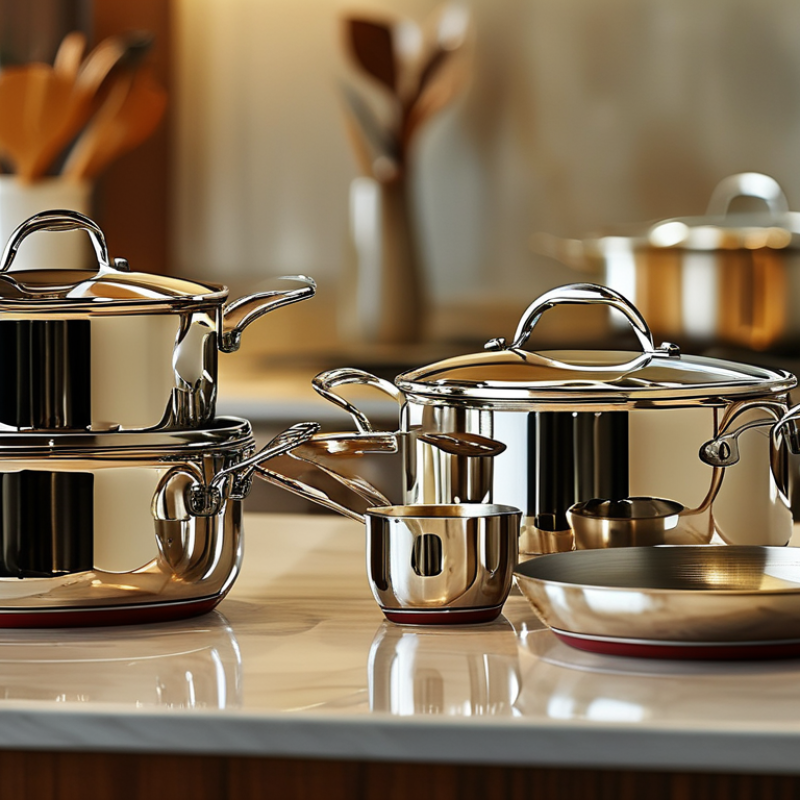
A high-quality stainless steel pan set should feel balanced before it reaches the stove. The handle must stay steady, even when the pan holds several cups of water. Look for food-grade stainless steel, such as 18/10 or 18/8 construction. These materials resist rust and unwanted flavor transfer. However, steel alone does not distribute heat evenly. A strong set usually includes an aluminum or copper core between steel layers. This layered base helps prevent hot spots and scorched sauces.
Pay attention to the cooking surface. It should be smooth, flat, and free from deep scratches or rough welding points. Riveted handles often provide reliable strength, but exposed rivets may collect residue. I once chose a pan with a beautiful mirror finish, yet its thin base heated unevenly. Appearance can mislead. Check the pan’s weight, wall thickness, lid fit, and compatibility with induction cooktops. Oven-safe temperatures also vary, especially when lids contain glass or plastic parts.
Choosing among the top stainless steel cooking pan sets requires more than counting pieces. Material grade matters. Euro Inox technical tables report thermal conductivity near 15 W/m·K for common austenitic stainless steel at room temperature. Aluminum conducts heat far faster, near 230 W/m·K, according to ASM material data. Therefore, a thin stainless pan may heat slowly and develop hot spots. A layered core changes the result.
Look for three-ply or impact-bonded construction with an aluminum or copper interior. The core should reach close to the sidewall, not stop beneath the cooking surface. This improves heat spreading around eggs, sauces, and thin fish fillets. A thick base can work well on flat electric surfaces, but it may respond slowly when the heat changes. Induction performance also depends on the magnetic exterior layer and a flat base.
Test the pan before buying. Place it on a flat counter and check for rocking. Hold the handle with one hand; excessive front weight becomes tiring during cooking. The U.S. Department of Energy notes that cookware size and flat contact affect electric stovetop efficiency, so matching pan diameter to the heating element matters. Bigger is not always better. I once favored a heavier pan, but its slow response made delicate sauces harder to control. Specifications help, yet actual balance, heat recovery, and cleaning effort deserve equal attention.
| Rank | Set Type | Typical Pieces | Main Material | Construction | Base Thickness | Included Pan Sizes | Induction Compatible | Typical Oven Rating | Dishwasher Safe | Heat Performance | Best For |
|---|---|---|---|---|---|---|---|---|---|---|---|
| 1 | Fully Clad 5-Ply Everyday Set | 10 pieces | 18/10 stainless steel with an aluminum core | Five-layer body from base to rim | 2.5–3.0 mm | 1.5 qt saucepan, 3 qt saucepan, 3 qt sauté pan, 8 in and 10 in skillets, 8 qt stockpot | Yes | 500°F / 260°C | Usually | Very even heating, strong heat retention, and good temperature control | Frequent home cooking and one-pan meals |
| 2 | Tri-Ply Starter Set | 8 pieces | 18/10 stainless steel with an aluminum core | Three-layer construction with an aluminum center | 2.0–2.5 mm | 1.5 qt saucepan, 3 qt saucepan, 10 in skillet, 6 qt stockpot | Yes | 500°F / 260°C | Usually | Balanced heating and faster response than thicker multi-ply cookware | First-time stainless steel buyers and smaller kitchens |
| 3 | Large Family Cookware Set | 12 pieces | 18/10 stainless steel with an aluminum or copper-aluminum core | Tri-ply body with impact-bonded base on larger vessels | 2.0–3.0 mm | 1.5 qt and 3 qt saucepans, 3 qt sauté pan, 8 in and 10 in skillets, 8 qt stockpot | Yes | 450–500°F / 232–260°C | Usually | Stable performance across large batches; slower to heat when fully loaded | Families, batch cooking, and holiday meals |
| 4 | Copper-Core Precision Set | 10 pieces | 18/10 stainless steel with a copper-aluminum conductive core | Five-ply body with a copper layer between aluminum layers | 2.5–3.0 mm | 2 qt saucepan, 3 qt saucepan, 3 qt sauté pan, 10 in skillet, 8 qt stockpot | Yes | 500°F / 260°C | Usually | Excellent responsiveness and highly uniform heat distribution | Sauces, reductions, delicate proteins, and precision cooking |
| 5 | Induction-Optimized Set | 9 pieces | 18/10 stainless steel with a magnetic stainless steel base | Encapsulated aluminum core with a flat magnetic exterior | 3.0–4.0 mm base | 1.5 qt and 3 qt saucepans, 10 in skillet, 6 qt stockpot | Yes | 450–500°F / 232–260°C | Usually | Fast induction response and stable flat-base contact; sidewall heating is more limited | Induction cooktops and flat-surface electric ranges |
| 6 | Compact Apartment Set | 7 pieces | 18/10 stainless steel with an aluminum impact-bonded base | Single-layer sidewalls and thick multi-metal base | 3.0–4.0 mm base | 1.5 qt saucepan, 2.5 qt saucepan, 8 in skillet, 5 qt stockpot | Yes | 400–450°F / 204–232°C | Often | Good base heat distribution but less even sidewall heating than fully clad designs | Small households, dorm kitchens, and limited storage |
| 7 | Heavy-Duty Professional Set | 12 pieces | 18/10 stainless steel with a thick aluminum core | Five-ply construction with reinforced rims and handles | 3.0–3.5 mm | 2 qt and 4 qt saucepans, 3 qt sauté pan, 10 in and 12 in skillets, 8 qt stockpot | Yes | 500°F / 260°C | Usually | Excellent heat retention and durability, with slower changes at low temperatures | High-volume cooking and demanding daily use |
| 8 | Essential Saucepan and Skillet Set | 5 pieces | 18/10 stainless steel with a three-layer base | Stainless steel body with an aluminum heat-spreading disk | 2.5–3.5 mm base | 2 qt saucepan, 10 in skillet, 3 qt sauté pan, 5 qt Dutch oven | Yes | 400–500°F / 204–260°C | Often | Reliable base heating with useful versatility, but less uniform than fully clad cookware | Buyers who prefer fewer, frequently used pans |
| 9 | Polished Entertaining Set | 11 pieces | 18/10 stainless steel with an aluminum core | Three-ply body with polished exterior and flared pouring rims | 2.0–2.8 mm | 1.5 qt and 3 qt saucepans, 3 qt sauté pan, 10 in skillet, 8 qt stockpot | Yes | 450–500°F / 232–260°C | Usually | Even enough for roasting and sautéing, with a moderately quick response | Serving guests, entertaining, and presentation-focused kitchens |
| 10 | Space-Saving Nested Set | 10 pieces | 18/10 stainless steel with an aluminum encapsulated base | Stackable bodies with straight sides and detachable or compact handles | 2.5–3.5 mm base | 1.5 qt and 3 qt saucepans, 8 in and 10 in skillets, 6 qt stockpot | Yes | 350–450°F / 177–232°C | Check handle design | Good base performance and efficient storage; compact designs may have less comfortable handles | Small kitchens, RVs, and buyers prioritizing storage efficiency |
Choosing the right stainless steel pan set depends on your cooking habits, not the number of pieces. An 8-inch skillet suits one egg or a small grilled sandwich. A 10-inch skillet handles two portions comfortably. The 12-inch version is better for family meals, but it becomes heavy when filled. A 2-quart saucepan works for sauces, oatmeal, and reheating soup. Choose a 4-quart sauté pan for vegetables, pasta sauces, and shallow braising. A 6- to 8-quart stockpot suits pasta, broth, and batch cooking.
Size matters more than appearance. The U.S. Department of Energy notes that matching cookware to the burner improves cooking efficiency. A pan that extends far beyond the burner may heat unevenly. USDA food-safety guidance also recommends 145°F for whole cuts, 160°F for ground meats, and 165°F for poultry. A responsive pan helps you reach these temperatures with better control. Still, stainless steel is not naturally nonstick. Beginners may need practice with preheating and oil timing.
Tips: Build a practical set with 8-, 10-, and 12-inch skillets, plus 2- and 4-quart pans. Check the 2024 Grand View Research cookware market report for broader material trends, but treat market forecasts as estimates. Handles should stay cool enough to grip, yet some designs disappoint near a hot oven. Test the balance before buying. Small details matter.
Choosing among the Top 10 Best Stainless Steel Cooking Pan Sets for Buyers requires more than counting pieces. Handle design affects safety, comfort, and control. I prefer handles with a firm, cool-touch grip and strong rivets. Hold the pan before buying, if possible. A heavy pan can strain your wrist during long cooking sessions. I once chose an attractive set with narrow handles, and flipping food soon became uncomfortable.
Lids deserve close attention. Tempered glass makes food visible, while stainless steel usually tolerates higher oven temperatures. Check whether the lid handle stays secure and whether steam can escape safely. A loose lid can rattle, leak, or collect greasy water around its rim. Small details matter. Also inspect the pan-to-lid fit, since uneven gaps waste heat and moisture.
Compatibility should match your kitchen. Confirm that the set works with gas, electric, ceramic, or induction cooking. A magnetic base is essential for induction. Oven-safe temperature limits differ, especially when handles include silicone or other materials. Stainless steel resists corrosion, but it still needs thoughtful maintenance. Preheat gradually, add oil after the surface warms, and avoid cold water on a hot pan. Soak stuck food instead of scraping aggressively. Dry the pans promptly to reduce water marks. I still find that low heat often cooks more evenly, although this habit requires patience and practice. A dishwasher may be convenient, but hand washing usually preserves the finish longer.
Choosing among the top 10 stainless steel cooking pan sets depends more on construction than piece count. A large set may include unused pans and cost more per useful item. For a practical budget, look for a skillet, saucepan, sauté pan, and stockpot. These four pieces cover eggs, sauces, vegetables, and family-sized meals.
Check the steel grade, thickness, and base design before paying. Multi-layer construction usually spreads heat more evenly than a thin, single-layer pan. It also reduces hot spots around delicate foods. A heavy pan should feel stable, but excessive weight can make daily cooking tiring.
Examine the handles, too. They should stay comfortable, remain firmly attached, and leave enough space for oven mitts. Matching lids are valuable because replacement lids can be surprisingly expensive.
Your cooktop matters. Confirm that the set works with induction if you use magnetic heating. Oven-safe temperatures should be clearly stated, not guessed from appearance. I once favored a cheaper set with polished surfaces, then noticed food sticking more often than expected. My mistake was ignoring the cooking instructions. Stainless steel needs preheating and enough oil. Small imperfections are normal. A few water marks do not mean poor quality. Avoid sets with sharp rims, loose handles, or vague warranty information. Spending slightly more on fewer reliable pieces may serve your kitchen better than collecting ten pans.
: Compare steel grade, thickness, construction, balance, handles, lids, and cooktop compatibility. Piece count alone can mislead.
Stainless steel transfers heat slowly. An aluminum or copper core spreads heat more evenly and reduces hot spots.
Yes. A core extending toward the sidewalls helps cook eggs, sauces, and thin fish more evenly.
No. Heavy cookware can feel stable but respond slowly when heat changes. Bigger is not better.
Place it on a flat counter. Check for rocking, sharp rims, loose handles, and excessive front weight.
A skillet, saucepan, sauté pan, and stockpot cover many daily tasks. Extra pieces may remain unused.
Confirm a magnetic exterior layer and a flat base. Pan diameter should match the heating element.
Preheat the pan and add enough oil before cooking. I once ignored the instructions and blamed the cookware unfairly.
Not usually. Small marks are normal, although they may require more cleaning effort.
Check heat recovery, handle comfort, lid fit, oven-safe limits, and warranty clarity. Specifications help, but they do not reveal everything.
Choosing the right Stainless Steel Cooking Pan Set starts with understanding what makes cookware dependable, durable, and efficient. A high-quality set should use strong stainless steel, reliable construction, and a balanced design that promotes even heating while resisting warping and corrosion. Comparing layered materials, base structure, thickness, and heat responsiveness can help buyers identify pans that perform consistently on different cooking surfaces. The best set should also include practical pan types and sizes, from small frying pans for quick meals to larger saucepans and stockpots for family cooking.
Comfort and convenience are equally important. Secure handles, well-fitting lids, manageable weight, oven safety, and compatibility with induction or other stovetops can greatly improve everyday use. Buyers should also consider cleaning requirements, maintenance, storage, and long-term durability. Finally, setting a realistic budget helps balance material quality, useful pieces, construction performance, and warranty value, ensuring the chosen set meets both cooking needs and financial expectations without paying for unnecessary extras.

Weihua Hardware